
garum


 1
9.9
- noun
- /ˈɡɛrəm/
- Archaic
- Stefan had resurrected from the Romans; he was a droll scholarly dude, my fork-tongued man, made with a special sauce called garum.
- garum fish sauce
Examples
-
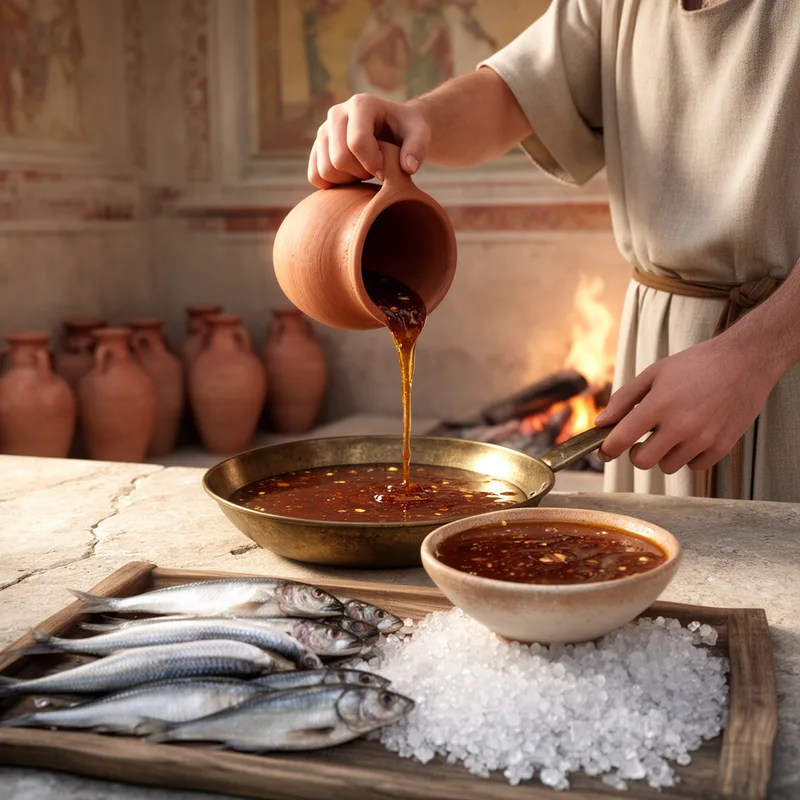
Many Roman recipes called for garum, a fermented fish sauce that was a staple in their cuisine.
-
In ancient Rome, garum was a popular condiment made from fermented fish that added flavor to many dishes.
-
Our chicken garum was three-quarters gone.
Fiction book (1994) -
On this island, the Romans made garum, a rancid fish sauce.
Academic text (2012) -
Add dates, pour in garum and oil, and a small quantity of mustard seeds.
Fiction book (1994) -
Garum, said Lister, was particularly conducive to digestion.
Academic text (2011) -
Like Garum and other fish sauces, it's aged for a fairly long period of time, but unlike those sauces, it is less a fish-dominant sauce than a fish-containing sauce.
Blog text (25) -
Among condiments, he favored the ubiquitous garum, or liquamen, the Roman fermented-fish sauce that resembles the Southeast Asian nam pla.
Academic text (2011) -
The chef enhanced the sauce with garum, a traditional Roman fish sauce known for its savory taste.
Synonyms
 17
2.0
A red tomato sauce with garlic and herbs for pasta or pizza
 1
8.4
A chopped mix of parsley, garlic, and lemon zest used to add fresh flavor to dishes
 1
8.8
A sweet and sour Italian sauce used on vegetables or meat
Surface Forms
Etymology
Garum comes from an old Greek word garon, which meant a strong, fermented 'fish' sauce used for flavour. The Romans made and used garum as a salty seasoning, so thinking of it as an ancient version of today's 'fish sauce' helps you remember its meaning.