
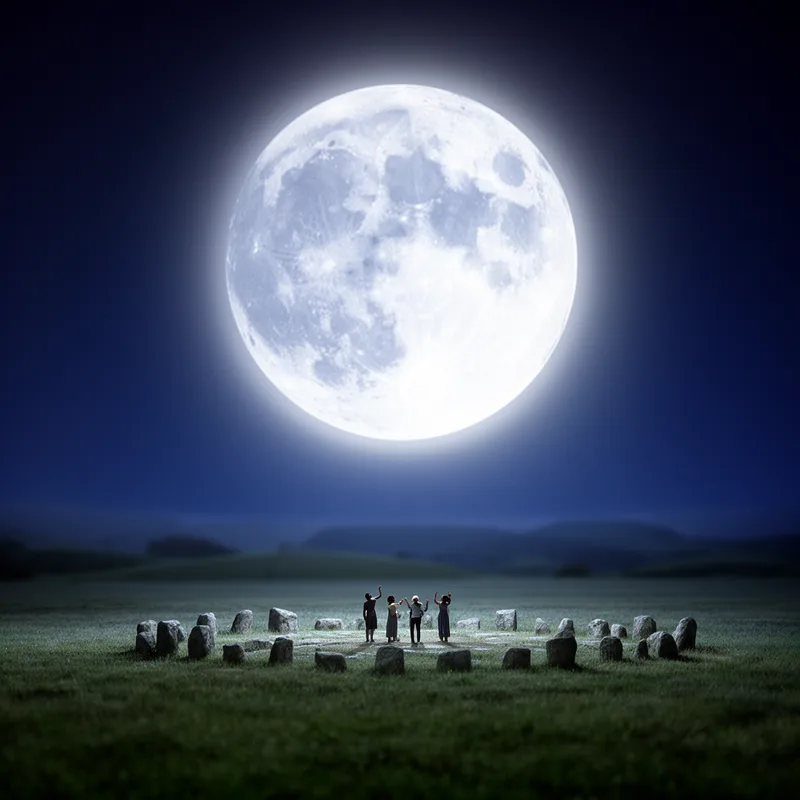
full-of-the-moon
- noun
- /fʊl əv ðə muːn/
- Many ancient festivals were celebrated at the full-of-the-moon each month.
Examples
-
On a full-of-the-moon, the tides are higher.
-
Some traditions believe that wishes made during the full-of-the-moon are more likely to come true.
-
The poet wrote about the beauty of the night at the full-of-the-moon.
-
The full-of-the-moon was breathtaking last night.
-
Many ancient festivals were celebrated at the full-of-the-moon each month.
-
Some traditions believe that wishes made during the full-of-the-moon are more likely to come true.
-
On a full-of-the-moon, the tides are higher.
Synonyms
 116
1.2
116
1.2

A time when the Moon's whole face looks bright from Earth

 1
2.4
1
2.4
The time when the Moon looks completely round and bright

A time when the Moon looks completely lit in the night sky
Antonyms

Surface Forms
Etymology
Full-of-the-moon is a direct, poetic phrase made from full ('complete') and moon ('the bright round object in the night sky'). So, it simply means the time when the Moon looks completely lit and its whole face is visible from Earth.