
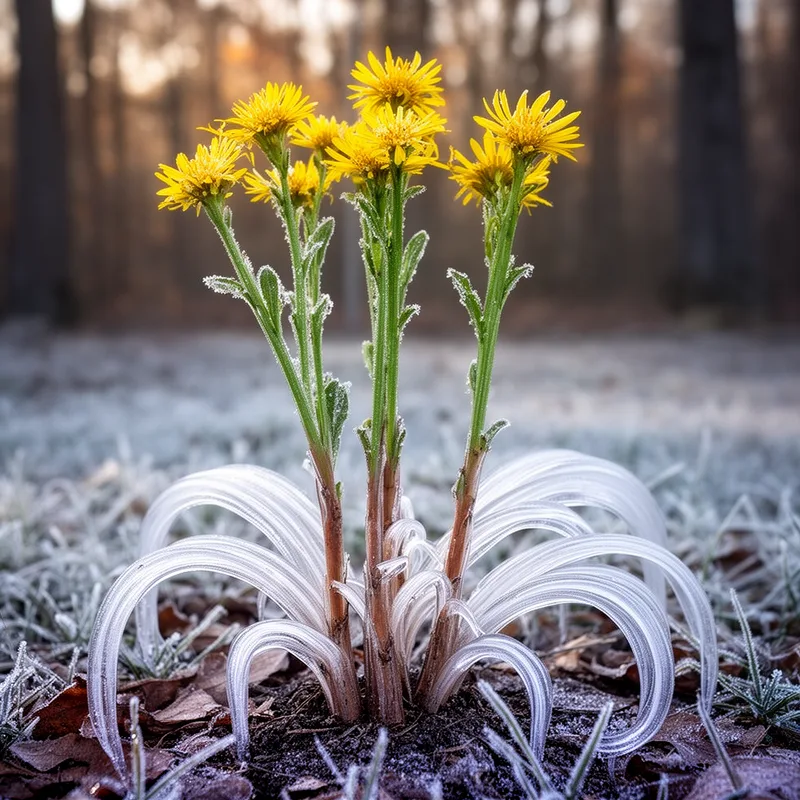
frostweed
- noun
- /ˈfrɔstˌwid/
- Specialized
- In late autumn, you can see ice curling from the stems of frostweed on chilly mornings.
Examples
-
The frostweed bloomed with bright yellow flowers at the edge of the forest.
-
Botanists are fascinated by how frostweed produces delicate ribbons of ice during the season's first frost.
-
Look at that frostweed!
-
What a beautiful frostweed!
-
In late autumn, you can see ice curling from the stems of frostweed on chilly mornings.
-
Botanists are fascinated by how frostweed produces delicate ribbons of ice during the season's first frost.
-
The frostweed bloomed with bright yellow flowers at the edge of the forest.
Synonyms
A plant from eastern North America with early yellow flowers and ice crystals on its stems
A North American plant with early yellow flowers that forms ice crystals on its stems in frost

A plant that lives many years, makes early yellow flowers, and gets ice crystals at first frost

A plant that lives for many years and makes thin ice at its base during frost and has white flowers
Surface Forms
Morphology
Etymology
Frostweed is made from two common words: frost ('thin ice') and weed ('wild plant'). It gets this name because in the first frosts the stems can push out thin ribbons of ice, so the word reminds you both of the plant and the delicate ice that forms on it during cold mornings.

