

Crocanthemum canadense
- noun
- Specialized
- During the first frost, you can often see ice crystals forming on Crocanthemum canadense stems.
Examples
-
The Crocanthemum canadense blooms in early spring with vibrant yellow petals.
-
Botanists identify Crocanthemum canadense in the wild by its unique flowering pattern.
-
The Crocanthemum canadense blooms beautifully in the spring.
-
Have you seen the Crocanthemum canadense in the garden?
-
You can find Crocanthemum canadense growing in many fields across eastern North America, especially during early spring.
-
In late autumn, the distinctive Crocanthemum canadense will often showcase its petalless flowers after the first frost.
-
Many gardeners appreciate Crocanthemum canadense for its ability to thrive in colder climates and provide early blooms.
Synonyms

A plant that lives many years, makes early yellow flowers, and gets ice crystals at first frost
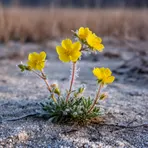
A plant from eastern North America with early yellow flowers and ice crystals on its stems
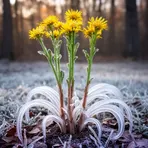
A plant that makes thin ice ribbons on its stems during first frosts and has yellow flowers

A plant that lives for many years and makes thin ice at its base during frost and has white flowers
Surface Forms
Morphology
Crocanthemum + canadense
This is a Latin binomial (scientific) name made of non‑English, lexically opaque elements; an average B1 learner who 'knows' the constituent strings (which are not common English words) would not be able to derive the plant meaning or the common name 'frostweed'. While 'canadense' may superficially hint at a Canadian origin, genus and species epithets are specialized morphological forms and do not transparently convey the full referential or descriptive meaning to general learners.
Etymology
Crocanthemum canadense is often called 'frostweed' because in the first frosts its stems make clear ice ribbons that look like frost. The part canadense shows it grows in northern North America, so the icy image helps explain and remember the name.

