

fourth cranial nerve
- noun
- /fɔrθ ˈkreɪniəl nɜrv/
- Specialized
- Because the fourth cranial nerve is so slender, it is particularly susceptible to trauma.
Examples
-
Damage to the fourth cranial nerve can cause double vision and difficulty looking downward.
-
The ophthalmologist suspected an issue with the patient's fourth cranial nerve after the eye exam.
-
The fourth cranial nerve is essential for eye movement.
-
Damage to the fourth cranial nerve can cause double vision.
-
The fourth cranial nerve is essential for controlling movements of the superior oblique muscle in the eye.
-
Damage to the fourth cranial nerve can cause difficulties with eye coordination and depth perception.
-
Doctors often test the function of the fourth cranial nerve to assess a patient's eye movement abilities.
Synonyms


 1
9.9
1
9.9
A nerve in the head that moves an eye muscle to turn the eye down and in

A part of the body that controls an eye muscle to move the eye down and to the side
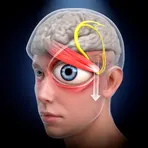
A nerve in the head that controls the top slanted eye muscle and helps you look down
Surface Forms
Morphology
The phrase is a straightforward composition: 'fourth' names the ordinal position, 'cranial' specifies location/association with the skull/brain, and 'nerve' denotes a neural bundle. This technical naming pattern is cross-linguistically common, so a B1 learner who knows the constituent words will understand it refers to the nerve numbered four associated with the skull (even if precise anatomical details require specialist knowledge).
Etymology
Fourth cranial nerve gets its name from old anatomy: doctors numbered the nerves that come from the brain, so fourth shows its place, cranial means from the head, and nerve is a bundle that sends messages. This nerve controls a small eye muscle that helps you look down and in, so when it is damaged a person can have 'double vision' or trouble looking down.