

forte
 1
7.7
1
7.7

- noun
- /ˈfɔrteɪ/
- Specialized
- Expressive sections incorporated a range of dynamics (piano to forte), articulation (pedal), and flexibility in tempo (rubato).
Examples
-
The conductor signaled for the orchestra to play the forte section of the symphony, and the sound filled the hall.
-
Chandeliers have fallen to the stage, and a piano forte's third leg has collapsed, so the instrument slants to the floor.
Blog text (1) -
For piano and forte, we placed our right hands palm down or palm up, respectively.
Academic text (2003) -
To some extent, every performer is being creative when he or she decides how fast allegro is or how loud forte should be.
Academic text (1991) -
And on his scores, instead of the usual pianissimo, forte, or crescendo indications, the markings went from "soft" or "very quiet" to "almost inaudible."
Fiction book (1997) -
Indeed, it actually had moments of force—not naturally the roaring force of a young virtuoso, but a controlled force in which a forte could sound mighty loud.
Academic text (1996) -
During the performance, the pianist transitioned smoothly into the forte, captivating the audience with the powerful crescendo.
-
In this piece, the forte passages highlight the dramatic moments of the composition, creating an intense atmosphere.
Antonyms
Compounds
- Specialized
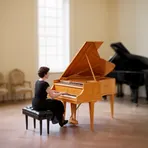
An early piano from the 18th and early 19th centuries with a lighter, more delicate sound
How Loud
- Specialized
1
8.4

- Specialized
1
7.7
- Specialized
- Specialized
Surface Forms
Etymology
Forte as a musical section comes from Italian forte meaning 'strong', used by composers to mark a 'strong' part of the music. So a forte is a passage to be played loudly.