
forte
7.7
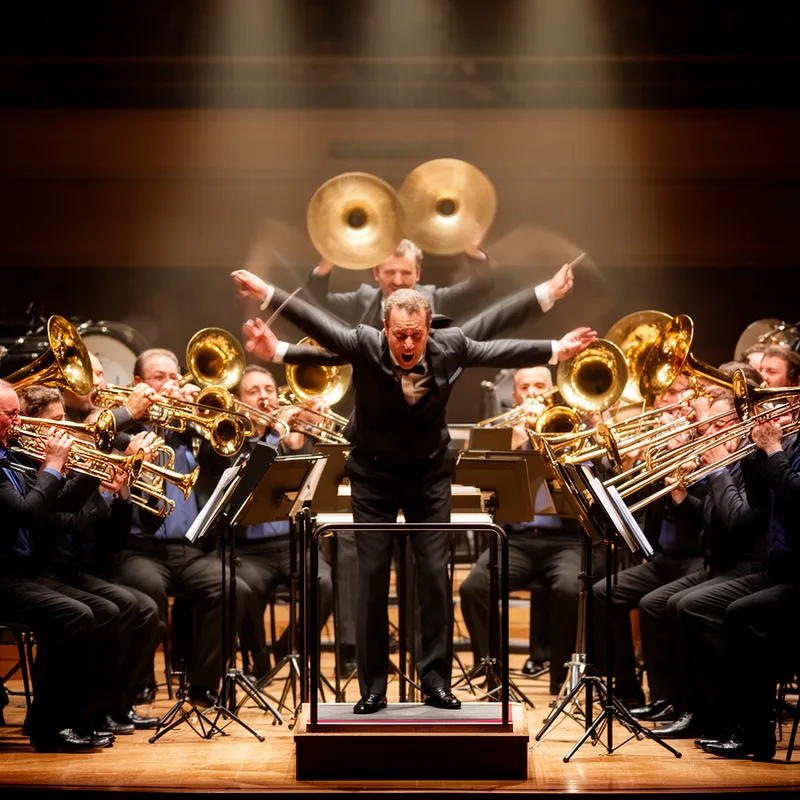
Played or sung loudly in music
- adjective
- /ˈfɔrteɪ/
- Specialized
:
fuerte
- The conductor raised his baton, indicating that the orchestra should play the passage forte.
Examples
-
Individual and sectional sounds will not be continually lost in a maze of heavy scoring and an unrelentingly forte dynamic level.
Academic text (1990) -
Here, 'cause the reigning dynamic is forte...
-
In this piece, the singer's voice should resonate forte to express the emotional climax.
-
The score instructs all instruments to perform forte during the final section.
Synonyms
loud
vsforte
 733
1.0
733
1.0

Having a very strong, high sound
is used as a musical marking to tell players to increase volume

loudly
vsforte
172
1.0
In a way that makes a lot of noise
is a musical instruction to raise playing volume rather than general noisy action

9.9
To play in a loud, strong way to show emphasis in the music
is a simple direction to increase volume without added force or emphasis
Antonyms
Compounds
forte-piano
- Specialized
9.9
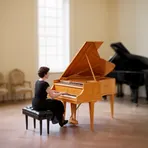
An early piano from the 18th and early 19th centuries with a lighter, more delicate sound
How Loud
fortissimo
- Specialized

forte
- Specialized
piano
24
3.1
- Specialized
24
3.1
pianissimo
 1
7.5
1
7.5
- Specialized
 1
7.5
1
7.5
Surface Forms
forte positive
Etymology
Forte (in music) comes from the Italian word forte and Latin fortis, both meaning 'strong'. In music it tells players to make a 'strong' sound, so it means 'loud'.