
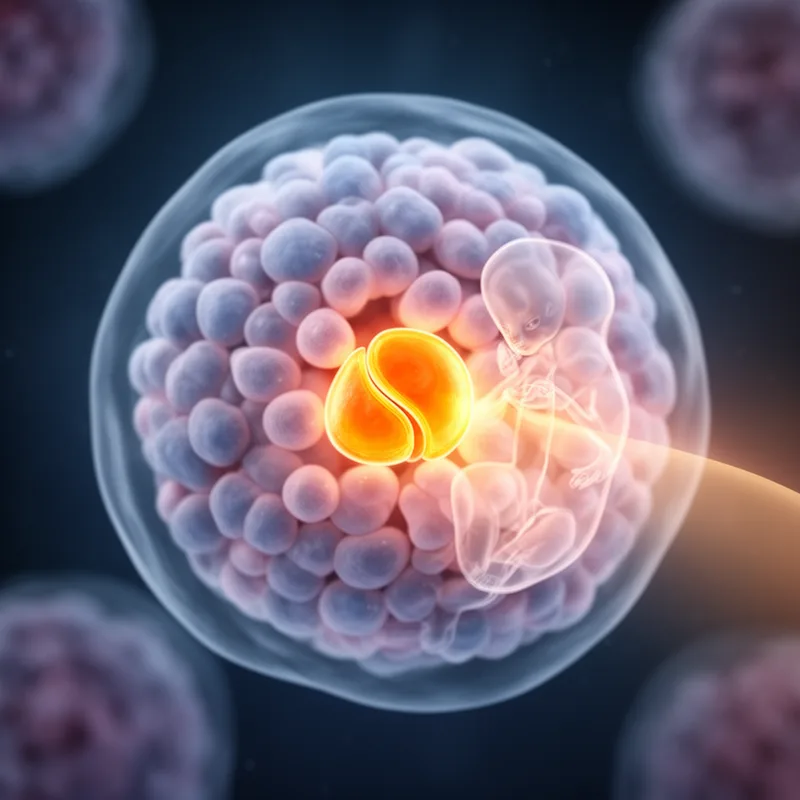
formative cell
- noun
- Specialized
- A formative cell can differentiate into various tissue types.
Examples
-
The division of a formative cell is a crucial early step in embryonic development.
-
Scientists observed how each formative cell contributed to the structure of the developing organism.
-
If a formative cell malfunctions, it can lead to developmental abnormalities.
-
The formative cells in the embryo are crucial for development.
-
Scientists studied how each formative cell transforms into specialized tissues in the growing embryo.
-
If a formative cell fails to develop properly, it may result in serious health issues later in life.
-
During the early stages of life, a formative cell can evolve into different types of organs.
Synonyms
 77
4.1
77
4.1

A basic body unit that can become different kinds of cells and make more of itself
 1
4.6
1
4.6
A cell in an embryo during early growth

 1
9.9
1
9.9
A cell in a very early embryo that has not yet become a specific tissue
How Potent
- Specialized

- Specialized
1
8.9
- Specialized
1
9.5
- Specialized
- Specialized
Surface Forms
Morphology
The phrase is a regular adjective + noun composition: 'formative' (producing or involved in formation) + 'cell' (a living unit) yields the straightforward idea of a cell involved in forming tissues. This compositional pattern follows normal English semantics and is cross-linguistically transparent, so a B1 learner who knows both words can infer the general developmental meaning (even if they miss technical biological details).
Etymology
Formative cell The term formative cell comes from the idea that formative means 'forms' and a cell is like a tiny builder or mold that can change into different parts of the body. So a formative cell is called that because it can 'develop' or 'become' specific tissues or organs.