

forage
 4
4.4
4
4.4

- noun
- /ˈfɔrɪdʒ/
- The availability of forage directly impacts the health of livestock during the winter months.
- livestock forage
- forage crop
- forage quality
Loading YouTube…
Watch on YouTubeHe's, he's basically tripled his forage on, on that land.
- He's, he's basically tripled his forage on, on that land.
Examples
-
However, the wild herbivores compete with their livestock for forage and indirectly reduce the food available to the Maasai.
Academic text (1996) -
Herring are relatively small and extremely important forage fish for marine mammals, seabirds, and other fish throughout their range.
Academic text (2000) -
Um, we're conducting this because of the lack of forage and water for these horses.
-
Their structure is just gorgeous and they make for really good forage and habitat for wildlife as well.
-
One reason is to provide animals with enough high-quality forage to meet their nutritional needs.
Academic text (2000) -
Nowhere, however, is the okapi's forage abundant or dense enough to support a herd.
Academic text (1992) -
Unchecked until now, it has crowded out forage and native grasses eaten by cattle and other livestock.
Academic text (2000) -
That's important because protein, a key nutritional component of forage grasses, depends on the nitrogen.
Academic text (1997) -
While uncut plots yielded 30 to 40 pounds of forage per acre, cut plots produced 300 pounds per acre.
Academic text (1994) -
Farmers often focus on the quality of forage to ensure their cattle grow healthy.
Synonyms
 111
1.0
111
1.0
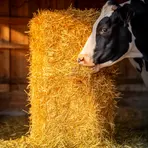
Grass that has been cut and dried as food for animals
 102
1.4
102
1.4
Land with grass where farm animals eat
 89
1.0
89
1.0
Food for farm animals like cows and chickens
 15
5.0
15
5.0
A plant grown for hay and food for farm animals
 4
5.3
4
5.3
Food like hay or stalks that farmers give to animals
 2
7.9
2
7.9
Food made from green plants like grass or corn that is stored and fermented to feed farm animals
 1
3.3
1
3.3
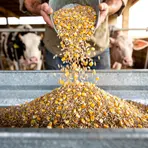
Seeds of crops like corn or barley that farmers grow to feed animals
 1
9.9
1
9.9
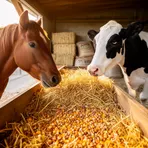
Food for farm animals like horses and cows
 1
8.8
1
8.8
Green plants in fields like grass and herbs that grazing animals eat
 1
8.2
1
8.2
Land with grass that animals like cows or horses eat

Plant food like grass or hay that animals eat

Food for farm animals like cows or pigs

Farmers store green crops in a silo and partly ferment them to feed animals
How Useful

Surface Forms
Etymology
Forage originally meant the food given to farm animals, coming from an old French word for fodder that means 'animal food'. So today forage as a noun still refers to bulky food like hay or grass for horses and cattle.