
jellyleaf
- noun
- Australian
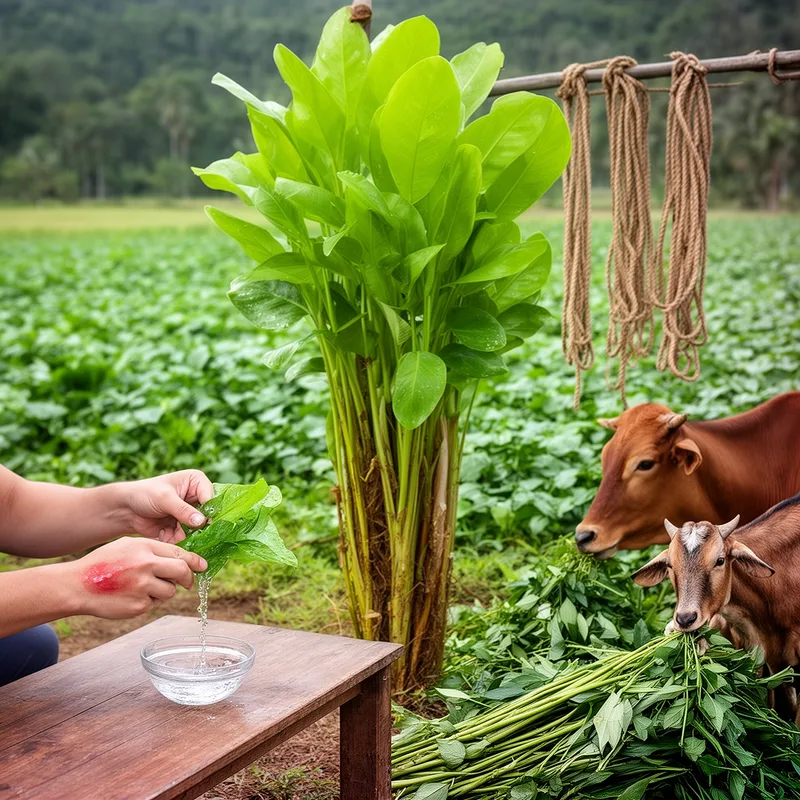
- Herbalists in the region value jellyleaf for its soothing, demulcent properties.
Examples
-
Local farmers use jellyleaf as a source of fiber that is even stronger than jute.
-
In some climates, jellyleaf can become an aggressive weed that invades agricultural fields.
-
The jellyleaf plant thrives in tropical climates.
-
Farmers often use jellyleaf as forage for livestock.
-
Herbalists in the region value jellyleaf for its soothing, demulcent properties.
-
In some climates, jellyleaf can become an aggressive weed that invades agricultural fields.
-
Farmers often use jellyleaf as forage for livestock.
Synonyms
A tropical herb with strong fiber used for ropes and traditional medicine, often a spreading weed
How Useful


Surface Forms
Morphology
Etymology
The word jellyleaf comes from the common words jelly and leaf, because the plant's leaves feel 'jelly-like' and give a slippery juice that can 'soothe' sore throats and skin. So, the name helps you remember that this herb is used as a soothing medicine, even though the same plant also gives very strong fiber and can grow fast and become a weed.