

fissiparity
- noun
- /ˌfɪsɪˈpærɪti/
- Specialized
- Scientists observed fissiparity in the laboratory population of planarian worms.
Examples
-
Some starfish are capable of fissiparity, regenerating missing limbs after splitting in two.
-
Many single-celled organisms reproduce through fissiparity.
-
In certain environments, fissiparity can be a highly effective mode of reproduction for survival.
-
The concept of fissiparity is fascinating in biology.
-
Many single-celled organisms reproduce through fissiparity, creating new individuals from one parent.
-
Scientists observed fissiparity in the laboratory population of planarian worms, where each fragment grows into a complete worm.
-
In certain environments, fissiparity can be a highly effective mode of reproduction, allowing organisms to quickly increase their numbers.
Synonyms
 1
6.3
1
6.3

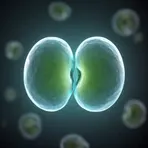
One single cell splits into two similar cells

 1
4.6
1
4.6
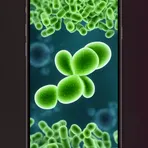
A way of making new living things from one parent without sex that makes identical copies
Surface Forms
Morphology
fissiparity = fissiparous (opaque) = fissipar + ity
The morphological change (forming a noun from the adjective 'fissiparous' with the suffix -ity) is a regular derivation.
Etymology
Fissiparity comes from Latin parts fiss meaning 'split' and parere meaning 'to give birth', so you can think of it as a 'split birth', just like fission or a fissure. That's why fissiparity means reproduction by a living thing splitting into parts, each part becoming a new individual.