
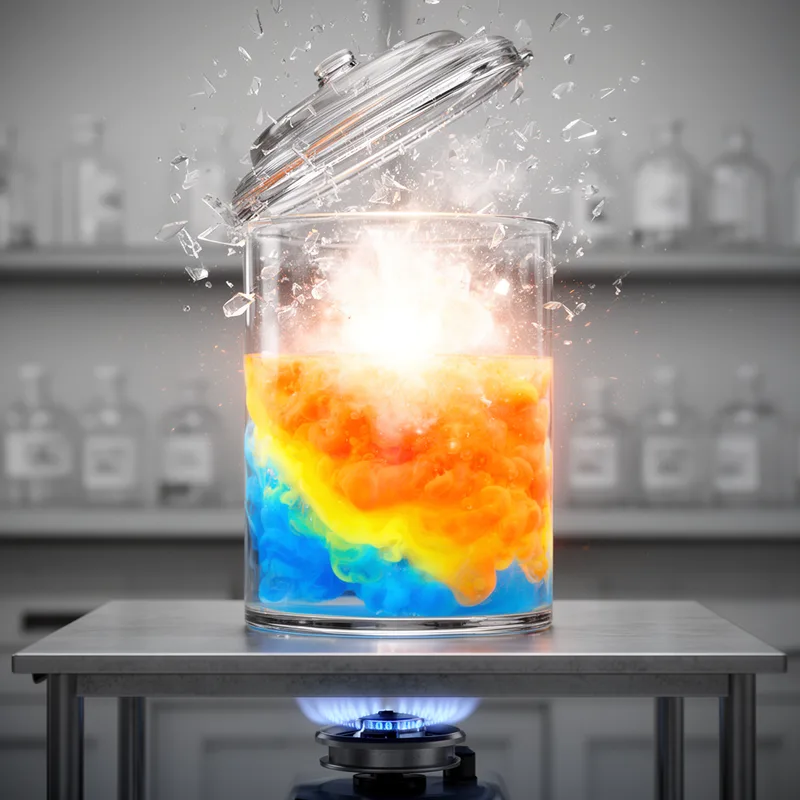
explosive mixture


 1
6.2
1
6.2
- noun
- /ɪkˈspləʊsɪv ˈmɪkstʃər/
- Specialized
- This releases hydrogen gas, which creates a highly explosive mixture with air.
Examples
-
The scientist carefully mixed the chemicals to ensure they wouldn't create an explosive mixture.
-
The spark that lit the long fuse to this explosive mixture was a speech by Premier Li Peng in late March.
Academic text (1990) -
If the vessel is breached, the cooling water electrolyzes into H and O2, which then creates the explosive mixture.
Blog text (20) -
An explosive mixture of gasoline and air can easily ignite and cause a fire.
-
Due to the heat, the combination of chemicals formed an explosive mixture that could detonate.
Synonyms
 336
5.5
336
5.5
A chemical that reacts very fast, making gas and heat to blast things
 51
3.2
51
3.2
A fine powder that burns quickly and makes explosions for guns and fireworks
 13
5.8
13
5.8
A very strong chemical that explodes quickly and makes a lot of gas and energy
 1
5.8
1
5.8
A chemical that can explode and cause a sudden violent reaction
 1
7.6
1
7.6
An explosive that burns slowly and does not make a strong shock wave like black powder
A strong chemical charge in shells or bombs that makes a violent blast

A small bomb that makes a sudden blast to break things like a wall or lock

A substance that explodes to push a shell or rocket forward

A strong chemical that pushes shells, rockets, or torpedoes forward
How Sensitive
- Specialized
336
5.5

- Specialized
1
6.2
Surface Forms
Morphology
The meaning 'a combination of substances that is capable of exploding' is directly and compositionally derived from 'explosive' (capable of exploding) + 'mixture' (a combination). This follows a regular adjective+noun pattern that is cross-linguistically common, so a B1 learner who knows both words will readily understand the MWE.
Etymology
Explosive mixture comes from the simple image of different substances joined together that can suddenly explode, with explosive showing the danger and mixture showing they are combined. So, it means 'capable of exploding'.