
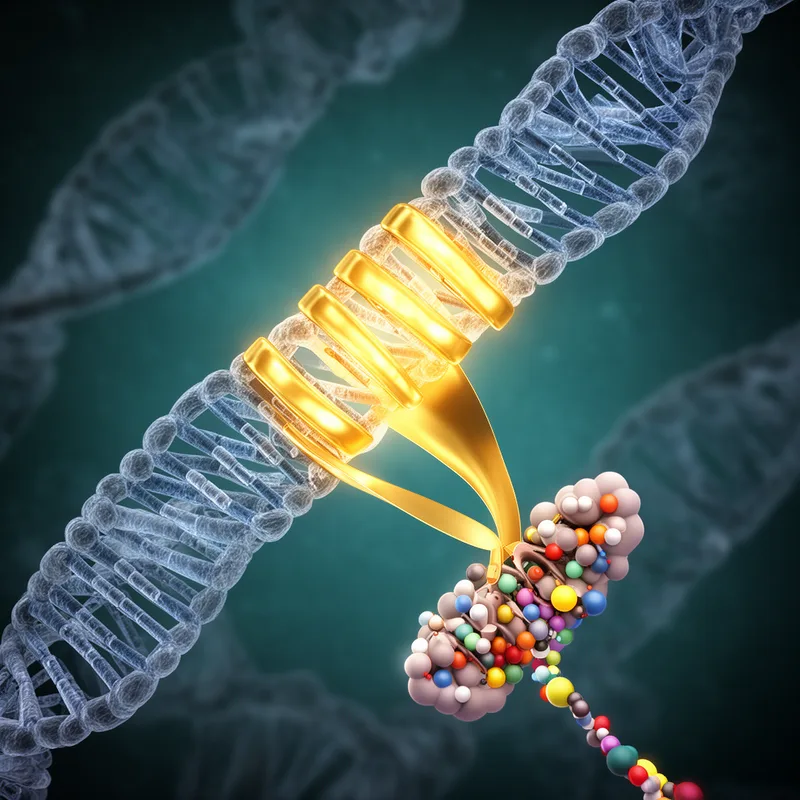
exon
 3
9.6
3
9.6

- noun
- /ˈɛkˌsɒn/
- Specialized
- We identified a 22-bp InDel variant in a protein-coding region of exon two of Ugt86Dd and developed a PCR assay to genotype it.
- exon-intron
- exons of the gene
- RPL30-exon sequence
Loading YouTube…
Watch on YouTubeIf you define gene by the exons that code the protein, then that's pretty simple, right?
- If you define gene by the exons that code the protein, then that's pretty simple, right?
Examples
-
The overall expression of each gene is calculated using the number of reads mapping to exons within each gene.
Academic text (2010) -
Teleost fish have two or more proglucagon genes composed of four or six exons.
Academic text (2006) -
For each sample, we performed exon capture sequencing.
Academic text (2018) -
We targeted independent regions within the early exons 3 and 4 by specific sgRNAs.
Academic text (2017) -
If you define gene by the exons that code the protein, then that's pretty simple, right?
-
In 2012, an extensive analysis of coding exons of 21,416 genes in 100 breast cancers identified novel driver genes, including CDKN1B153.
Academic text (2017) -
To make matters worse, each exon codes for only a portion of a protein.
-
Each module might be specified by one exon of the gene.
-
The overall expression of each gene is calculated using the number of reads mapping to exons within each gene.
Antonyms
- Specialized
6
8.4
A part of a gene that does not make protein and is cut out from RNA before it is used
Surface Forms
Etymology
Exon names the parts of a gene that are 'expressed' — meaning they are kept and used to make a protein. A helpful way to remember it is to think of ex- like in exit meaning 'out' or 'outside' and opposite the word intron ('inside' part that is removed), so an exon is the useful piece the cell keeps to build a protein.