
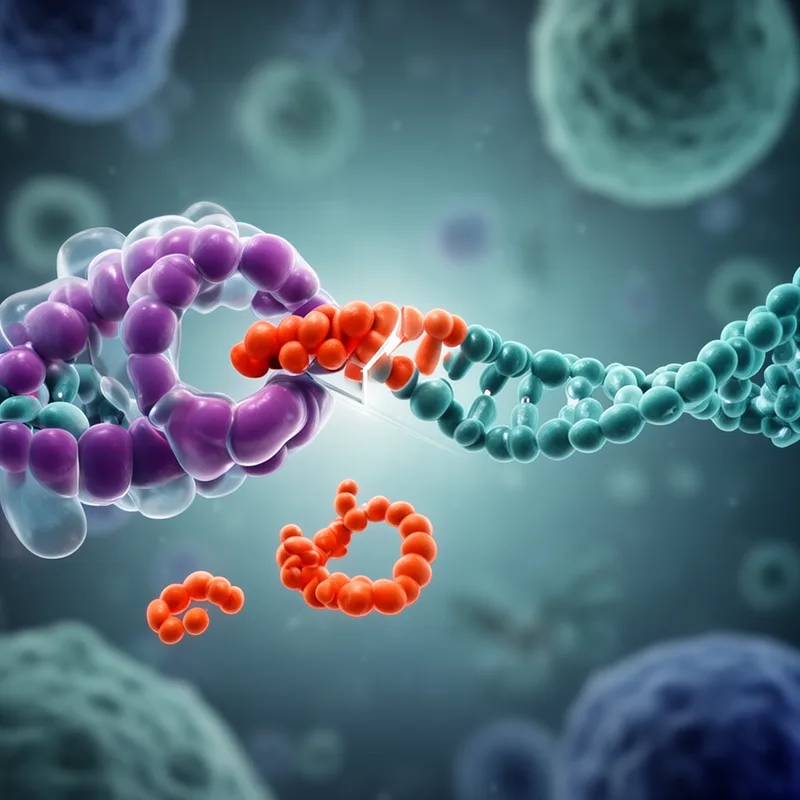
intron
 6
8.4
6
8.4

- noun
- /ˈɪntrɒn/
- Specialized
- Some conserved intron retention events exhibit high cross-species sequence conservation based on multiple sequence alignments (Figure S1 in File S1).
- intron-exon
- gene introns
Examples
-
And what happens in splicing is that the introns are chopped out, OK?
-
The tyrosinase gene contains several introns, so for DNA amplification by PCR, we selected primers represented on different exons of the gene.
Academic text (1992) -
Lots of organisms have lots and lots of introns, and those introns are often very big.
-
Then you could ask him why he believes that all intron sequences (about 20% of our genome) are functional.
Blog text (18) -
The structure of the full gene with its long introns can also be readily attained.
Academic text (2009) -
Intron gain might promote the increased expression (thick black arrow) of a transferred gene.
Academic text (2018) -
CiRNAs were first discovered by Zhang and colleagues in human cells and are derived only from introns.
Academic text (2017) -
To validate the intron-exon structure predicted by the computer software, full-length cDNA was cloned for the candidate gene.
Academic text (2018) -
The difference in lengths of conserved retained introns vs. nonconserved retained introns (i.e., unique to only one species) varies across the nine species examined.
Academic text (2017) -
In the process of gene expression, introns are removed from the RNA transcript before translation.
Antonyms
Surface Forms
Etymology
Intron comes from the part intra- meaning 'inside' and the ending -on used in biology. So, an intron is an 'inside' piece of a gene that is cut out and does not become protein.