

exergonic
- adjective
- /ˌɛksərˈɡɒnɪk/
- Specialized
- We would call this an exergonic reaction because we're releasing energy in the in the transformation.
Examples
-
During cellular respiration, glucose undergoes an exergonic reaction, releasing energy that the cell uses to function.
-
Chemical reactions can be exergonic, but they may not proceed spontaneously.
-
The breakdown of ATP into ADP is an exergonic process that provides energy for various cellular activities.
-
Many exergonic chemical reactions are important in metabolism because they release energy that drives biological functions.
Synonyms

 3
6.5
3
6.5

A chemical reaction that gives off heat

 1
4.1
1
4.1
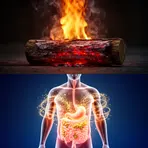
A process that gives off energy, for example burning or digestion
 1
8.2
1
8.2
Giving out heat during a chemical reaction

Releasing energy in a chemical or nuclear reaction
Antonyms

- Specialized
A chemical reaction that needs energy because the things made have more energy than the ones you start with
How Energy-Releasing
- Specialized

- Specialized
Surface Forms
Morphology
exergonic = ex + ergon + ic
The term is built from scientific combining forms (ex- 'out' + ergon 'work') which transparently signal 'releasing work/energy' to those familiar with such morphology, but these morphemes are not common knowledge for average B1 learners.
Etymology
Exergonic comes from the parts ex- meaning 'out' and ergon meaning 'work', the same root as energy. So an exergonic process is one where 'work' or energy goes 'out' and the reaction releases energy.