
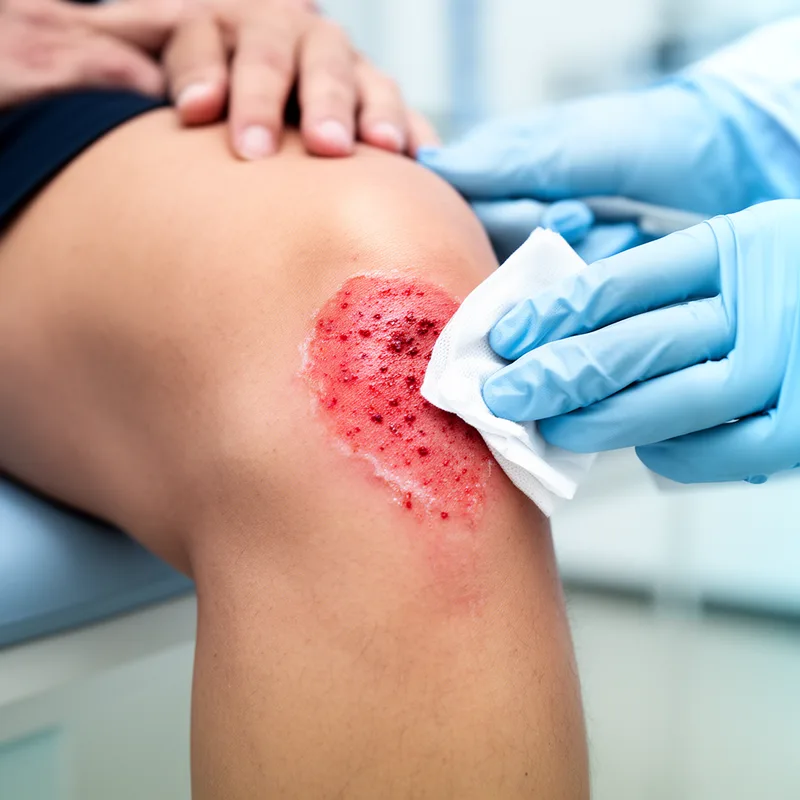
excoriation
- noun
- /ɪkˌkɔːriˈeɪʃən/
- Genital lesions due to infections or other causes, and sexual practices that may lead to excoriations or breaks in the skin or mucous membrane surfaces of the genitalia, greatly enhance the likelihood of infections.
Examples
-
Changes in the color of the skin, blisters, bruises, and excoriations often develop and are signs of early breakdown.
Academic text (1995) -
The nurse applied ointment to the excoriations on his back, helping to soothe the irritated skin.
-
This time she had an extensive rash, excoriation, and pruritus vulvae.
Academic text (2007) -
The only thing that marred his appearance, aside from his pasty white color, was the excoriations on his forearms.
Fiction book (1992) -
The doctor examined the patient's arm and noted several excoriations caused by excessive scratching.
-
After playing outside, the child came home with excoriations on her knees from falling on the gravel.
Synonyms

 203
1.6
203
1.6

A thin shallow mark on skin or a surface made by something sharp
 41
4.8
41
4.8
An area of skin rubbed off by scraping
 30
1.3
30
1.3
A mark on a surface caused by rubbing it against something hard
How Severe

Surface Forms
Morphology
Etymology
Excoriation comes from the Latin parts ex- 'out' and corium 'skin', so it literally means a place where the skin has been scraped or worn away. This origin explains why excoriation is used for a physical scrape or sore.