
eusocial
 1
9.9

- adjective
- /juːˈsoʊʃəl/
- Specialized
- A good example of the predicted association between high relatedness and high skew comes from the eusocial naked mole-rat, Heterocephalus glaber.
- eusocial species
- eusocial insect
- eusocial wasp
Examples
-
With a shift in the available environment in space or time, eusocial behavior would become the norm.
Academic text (2008) -
Interestingly, potential conflicts over partitioning of reproduction are still present in many eusocial insect societies with morphological castes.
Academic text (1999) -
In that generation, the eusocial colony originates.
Academic text (2008) -
Social organization of ants, bees, and wasps is built around reproductive specialization: most eusocial insect colonies have a single queen.
Blog text (31) -
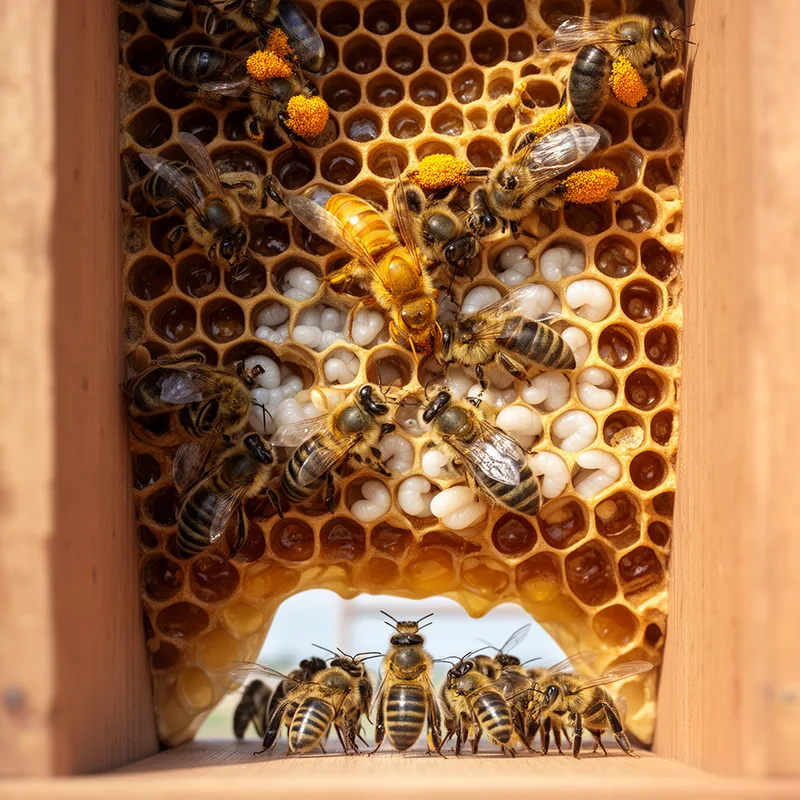
Many species of insects, such as bees and ants, are eusocial, living in organized colonies with specific roles.
-
In modern terminology, ants and bees are eusocial, which means 'truly social.'
-
Naked mole rats exhibit eusocial behavior by living in large colonies where they share responsibilities and care for their offspring.
Antonyms

How Social

Surface Forms
Morphology
Etymology
Eusocial comes from the Greek part eu- meaning 'true' or 'good' and the familiar word social. So eusocial literally means 'truly social' and describes animals like bees and termites that live in very organized groups, share work, and care for the young.