
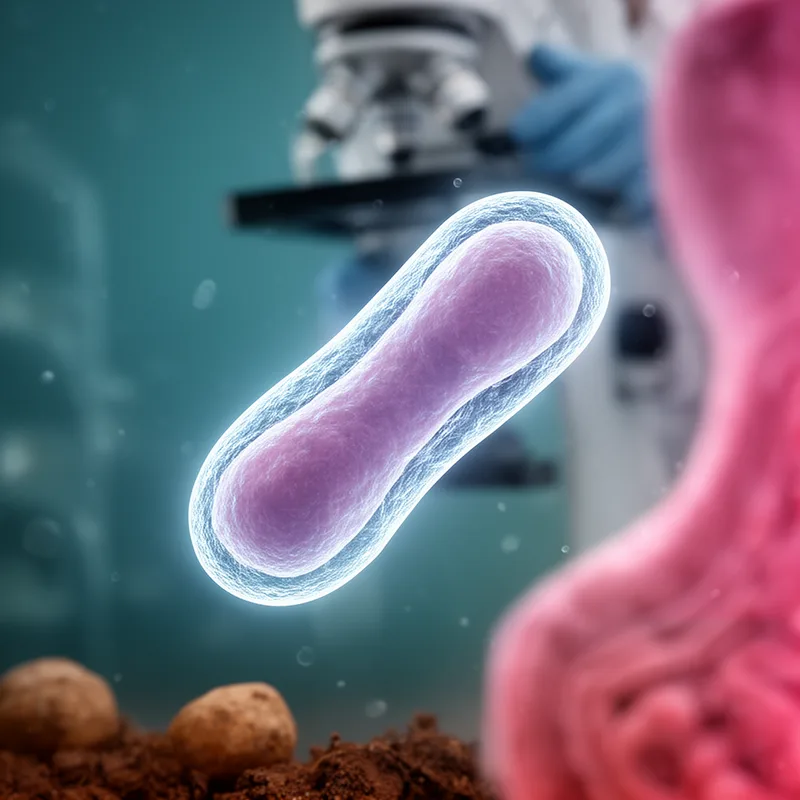
eubacterium
- noun
- /ˌjuːˈbæktəriəm/
- Specialized
- The scientist identified the organism as a eubacterium under the microscope.
Examples
-
The eubacterium plays a crucial role in the nitrogen cycle.
-
Some species of eubacterium are essential for digestion in the human gut.
-
Unlike archaea, a eubacterium typically has a rigid cell wall.
-
Many eubacteria are essential for human health.
-
The human gut contains Eubacterium, which plays a vital role in digestion.
-
Researchers are focused on Eubacterium to learn more about its functions in soil health.
-
Certain types of Eubacterium are known to be motile due to their flagella.
Synonyms

A large group of bacteria with firm cell walls, many having tiny tails to move

A major group of bacteria with firm cell walls, including common kinds that cause disease
Surface Forms
Morphology
Etymology
Eubacterium comes from Greek parts eu- meaning 'true' or 'good' and bacterium, the same root as in bacteria. So an eubacterium means a 'true' or typical bacterium, which helps explain why the word is used for the common kinds of bacteria found in soil, water and the human gut.

