
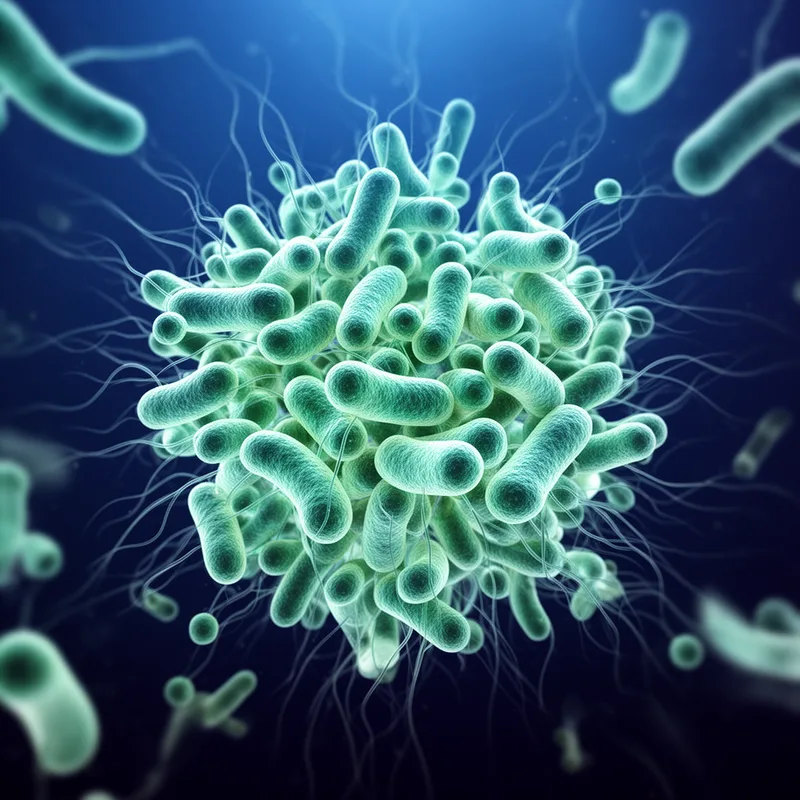
eubacteria
- noun
- /juːbækˈtɪəriə/
- Specialized
- Many eubacteria, such as those found in yogurt, play a crucial role in fermentation.
Examples
-
Eubacteria are essential for many processes in nature, including the breakdown of organic matter.
-
After explaining his general outlook on biology in chapters 1 and 2, Harold then gets down in chapter 3 to a detailed consideration of cell types and their organization into eubacteria, archaebacteria, and eukaryotes.
Academic text (2003) -
Scientists study eubacteria to understand how they contribute to nutrient cycling in ecosystems.
Synonyms

A major group of bacteria with firm cell walls, including common kinds that cause disease

A large group of single-celled living things that have rigid cell walls
Compounds
- Archaic
A large group of single-celled living things that have rigid cell walls
Surface Forms
Morphology
Etymology
Eubacteria starts with Greek eu- meaning 'true' or 'good' and the part bacteria, meaning 'small rods' or 'small life' (the same bacteria you already know). So eubacteria are the 'true' or common bacteria — the main group of bacteria with the usual rigid cell walls you learn about in biology.

