

division Eubacteria
- noun
- /dɪˈvɪʒən juːˈbæktɪəriə/
- Archaic
- The division Eubacteria includes many familiar bacteria.
Examples
-
Photosynthetic members of the division Eubacteria play a key role in producing oxygen.
-
Scientists have studied the division Eubacteria to understand antibiotic resistance in pathogens.
-
Many species within the division Eubacteria can survive in extreme environments such as hot springs.
-
Did you know that division Eubacteria is crucial for many ecosystems?
-
Many species within the division Eubacteria can survive in extreme environments such as hot springs.
-
Photosynthetic members of the division Eubacteria are essential for producing oxygen in the atmosphere.
-
The division Eubacteria includes various familiar bacteria that are important in food production.
Synonyms
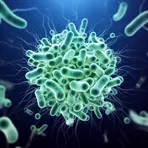
A large group of bacteria with firm cell walls, many having tiny tails to move
Surface Forms
Morphology
The phrase is compositionally transparent: 'division' as a taxonomic rank combined with the proper noun 'Eubacteria' yields the meaning 'the taxonomic division consisting of Eubacteria'. Although the terms are technical, the classification pattern (rank + group name) is regular and cross-linguistically familiar, so a learner who knows both constituents can infer the MWE's meaning.
Etymology
Division Eubacteria comes from older biology naming, where scientists put the 'true' bacteria into one large division called Eubacteria. Think of a folder labeled Eubacteria holding simple, single-cell organisms with hard cell walls, and that image helps you remember it means a major 'group' of simple bacteria.

