

true bacteria
- noun
- /tru ˈbækˌtɪrɪə/
- Specialized
- Many true bacteria are essential for human health.
Examples
-
The true bacteria are distinguished from archaea by differences in their cell wall composition.
-
Many pathogens that cause disease in humans are classified as true bacteria.
-
Flagella enable some true bacteria to move independently in their environment.
-
A true bacterium can survive in extreme environments.
-
Scientists discovered new strains of true bacteria that can survive extreme conditions.
-
Researchers are studying how true bacteria play a role in the human gut microbiome.
-
Many true bacteria are essential in breaking down organic matter in soil.
Synonyms
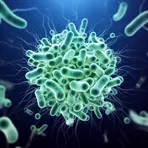
A large group of bacteria with firm cell walls, many having tiny tails to move
Surface Forms
Morphology
The phrase combines the familiar adjective 'true' (genuine/typical) with 'bacteria', so a learner who knows both words can infer a sense of 'typical' or 'real' bacteria. However, the technical taxonomic meaning (contrast with archaea/eubacteria and specific biological characteristics) is specialized and not predictable from the constituents alone, so full understanding requires domain knowledge.
Etymology
True bacteria comes from scientists who used true to mean the ordinary kinds of bacteria, not the odd group called archaea. So true bacteria now refers to the main group of bacteria that are 'different from archaea' and often have stiff cell walls.

