
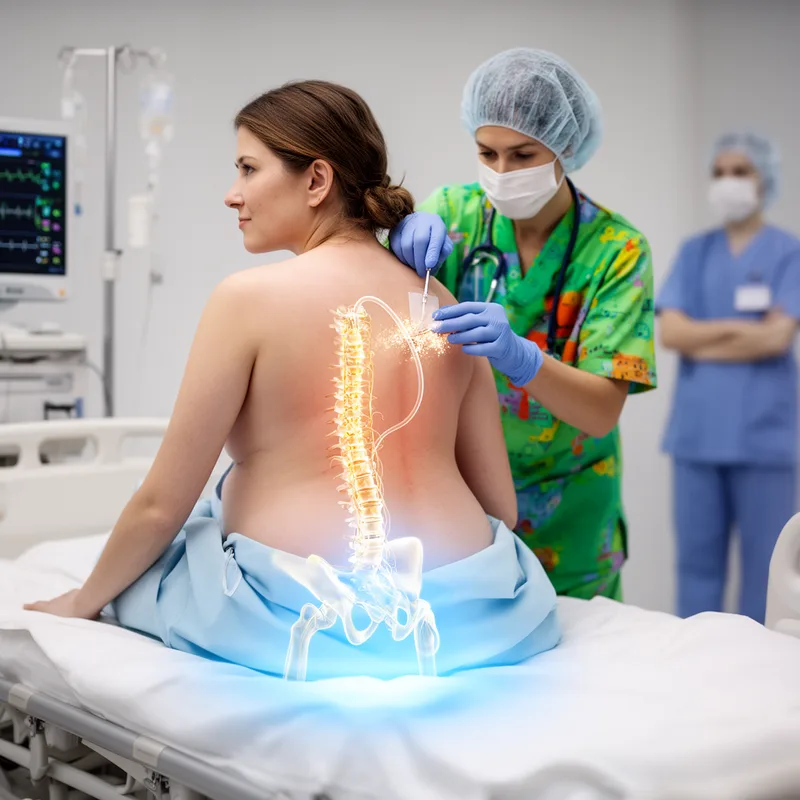
epidural anesthesia
- noun
- /ˌɛpɪˈdʊrəl ænəsˈθiʒə/
- Specialized
- The doctor explained that epidural anesthesia would help her manage the discomfort during labor.
Examples
-
Finally, the selection of spinal or epidural anesthesia may be limited in obese patients because of obscured bony landmarks (Shamsuzzaman et al., 2003).
Academic text (2006) -
Epidural anesthesia is commonly used during childbirth to relieve pain in the lower body.
-
Many women choose epidural anesthesia for its effectiveness in numbing pain during delivery.
Synonyms

 25
5.5
25
5.5

An injection of pain medicine near the spine to numb the lower body during childbirth or surgery


 1
3.7
1
3.7
A doctor gives a shot of pain medicine near the spine to numb the lower body

Numbs a part of the body so you do not feel pain during surgery
Antonyms

- Specialized
10
3.9
A medicine that makes someone completely unconscious so they do not feel pain during major surgery
Surface Forms
Morphology
The term is compositionally built: 'epidural' specifies the regional/location method (in or near the epidural space) and 'anesthesia' denotes induced loss of sensation, so the combined phrase straightforwardly means anesthesia given via the epidural route. This is a transparent type-of noun compound and, aside from 'epidural' being a medical label, a learner who knows both constituents can infer the full meaning.
Etymology
The term epidural anesthesia names an injection placed just above the tough outer layer around the spine. The parts epi- ('on' or 'above') and dural ('dura', the outer layer) point to that spot, so the medicine makes the lower body 'numb'.