
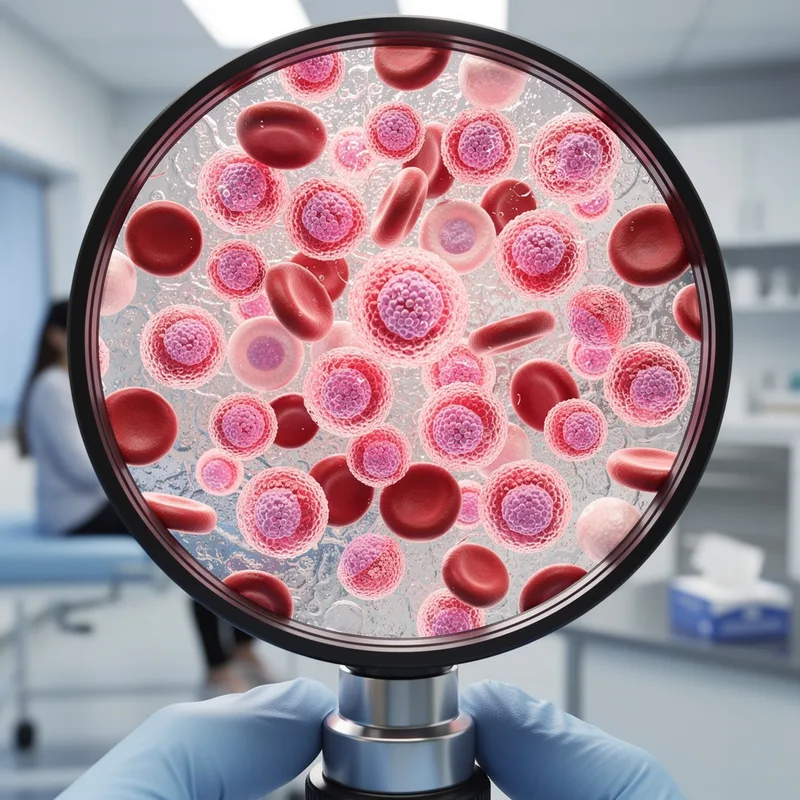
eosinophilic
 1
9.9

- adjective
- /ˌiːəˌsɪnəˈfɪlɪk/
- Specialized
- Laboratory investigation reveals peripheral eosinophilia in eosinophilic cholecystitis associated with systemic hypereosinophilic disorders.
- eosinophilic esophagitis
- eosinophilic cytoplasm
- eosinophilic cholecystitis
Loading YouTube…
Watch on YouTubeThere are conditions, Quick example is eosinophilic esophagitis.
- There are conditions, Quick example is eosinophilic esophagitis.
Examples
-
Large vesicular tumor cell nuclei were also seen with prominent eosinophilic nuclei.
Academic text (1996) -
Microscopically, the oncocytes appear as large cells with a distinctly deep eosinophilic, finely granular cytoplasm.
Academic text (2009) -
The cytoplasm varied from pale to eosinophilic and from scarce to abundant.
Academic text (2005) -
However, the pathologic features intrinsic in eosinophilic esophagitis do not respond to acid-suppression treatment.
Academic text (2009) -
The etiology is obscure and is implicated in various local and systemic eosinophilic inflammatory reactions.
Academic text (2007) -
The earliest recognizable histopathologic change is either eosinophilic spongiosis or spongiosis of the lower epidermis.
Academic text (2007) -
Kimura disease was first described in China in 1937 by Kimm and Szeto, who called it an eosinophilic hyperplastic lymphogranuloma.
Academic text (2010) -
Histology will show large cells with abundant granular eosinophilic cytoplasm and a round to oval paracentral nucleus.
Academic text (2010) -
The interstitial connective tissue becomes edematous and eosinophilic, with fraying, fragmentation, and disintegration of collagen fibers.
Academic text (2007) -
The presence of eosinophilic cells in the tissue sample indicated an allergic reaction.
Surface Forms
Morphology
eosinophilic = eosinophil (opaque) = eosin + phil + ic
The noun 'eosinophil' is analyzable as 'eosin' + '-phil' within biomedical terminology, but the combining form and technical meaning are specialized.
Etymology
Eosinophilic comes from the dye eosin, taken from a Greek word meaning 'dawn' because the dye makes things 'pink', and the ending -philic means 'loving' or 'attracted to'. So an eosinophilic cell or area 'loves' eosin and turns pink, which is why doctors use the word for certain white blood cells and tissues that stain this way.