

enervation
- noun
- /ˌɛnərˈveɪʃən/
- Archaic
- The surgeon opted for enervation to relieve the patient's chronic pain.
Examples
-
After the enervation, the patient experienced numbness in the affected area.
-
The doctor explained the risks of enervation during the procedure.
-
In veterinary medicine, enervation may be performed to improve mobility.
-
After the enervation, the patient felt immediate relief.
-
The physician completed the enervation to address the nerve discomfort in her leg.
-
During the surgery, the enervation was crucial to alleviate the patient's persistent pain.
-
The specialist discussed the enervation process and its effects on nerve functionality.
Synonyms
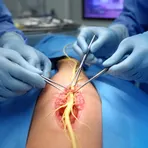
A surgery that removes all or part of a nerve

Loss of nerve connection to a part of the body that reduces feeling or movement
Surface Forms
Morphology
Etymology
Enervation comes from the verb enervate, built from e- ('out') and nerve, so it originally meant 'to take out the nerve'. Surgeons use the term in this literal way when they remove a nerve, which is why enervation can mean the surgical removal of a nerve.

