

emotional disorder
 2
5.1
2
5.1

- noun
- /ɪˈmoʊʃənl dɪsˈɔrdər/
- Specialized
- Understanding the symptoms of an emotional disorder can help individuals find the right support.
- behavioral and emotional disorder
Loading YouTube…
Watch on YouTubeBut changing the way one thinks is the bedrock of probably the most effective form of treatment for emotional disorders.
- But changing the way one thinks is the bedrock of probably the most effective form of treatment for emotional disorders.
Examples
-
Many people struggle with an emotional disorder that affects their daily lives.
-
Therefore, they were deemed different from children with deficient intelligence or emotional disorders.
Academic text (1996) -
Did you know it was an emotional disorder?
-
Boy, my wife sure has an emotional disorder.
-
His students are surprised by how much is still not known about the causes and treatments of mental and emotional disorders, he says.
Academic text (2005) -
Also check with your school district for guidance on local policy and appropriate classroom accommodations for students with emotional disorders.
Blog text (4) -
Charles, who was diagnosed with Tourette's syndrome, a severe emotional disorder, was 8 years old and in fourth grade.
Academic text (2001) -
Other factors such as pre-existing emotional disorders, food allergies, and child abuse must be ruled out before labeling a child as having ADHD.
Academic text (1992) -
Many family experts studying families of children with disabilities, such as cognitive, learning, and emotional disorders, report that the presence of a child with a disability creates stress that often has restrictive and disruptive effects on the family and requires continual readjustment in family roles, relationships, and organization.
Academic text (2001) -
She decided to seek therapy to manage her emotional disorder more effectively.
Synonyms
 129
3.1
129
3.1
A health problem that affects how a person thinks, feels, or behaves and may need medical help
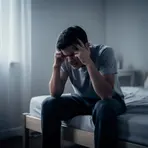 20
3.3
20
3.3
A condition that causes problems with thinking, feeling, or behaving
 2
7.5
2
7.5
A mental illness that causes strong, lasting changes in mood, like depression or bipolar condition
 1
7.4
1
7.4
A mental illness that causes big changes in mood and feeling

A serious mental illness that causes very low or very high mood
Antonyms

How Severe

Surface Forms
Morphology
The phrase 'emotional disorder' is directly interpretable as a 'disorder related to emotions' by combining 'emotional' (about emotions) with 'disorder' (a medical/psychological condition). This compositional reading follows common cross-linguistic patterns, so a B1 learner who knows both constituents would readily infer the meaning.
Etymology
Emotional disorder gives a simple picture: emotional points to a person's 'emotions' and disorder suggests those feelings are 'out of order' or messy. So, it means a mental condition where someone's feelings are very disturbed and cause problems in daily life.