
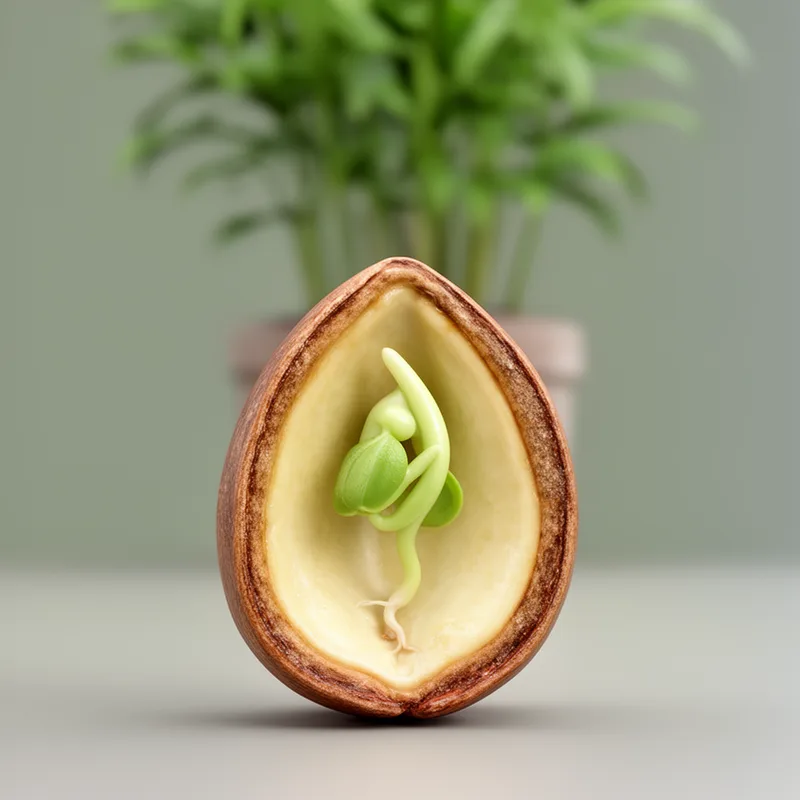
embryo
 1
5.6
1
5.6

- noun
- /ˈɛm.bri.oʊ/
- Specialized
- And when the growth process starts, those seeds make enzymes that break that starch into sugars that the embryo can use to grow and turn into a plant.
- embryo rescue
- embryo tissue
- plant embryo
Loading YouTube…
Watch on YouTubeWho knew that when you eat one, you're eating little plant embryos?
- Who knew that when you eat one, you're eating little plant embryos?
Examples
-
"All the embryos were planted," Dr. Wingate said.
Fiction book (1991) -
Surviving embryos will hatch in about ten days.
Academic text (2003) -
He went on to describe the appearance of the embryo, the appearance of the heart.
-
Fish, crabs, and mammals will feed on the deposited embryos.
Academic text (2003) -
The guidelines include several provisions designed to discourage anyone from donating embryos for profit or the medical benefit of relatives.
Academic text (2001) -
Ramming pioneered the use of embryo rescue several decades ago to breed superb seedless grapes.
Academic text (2006) -
Their winning strategies included using barley embryos—bits of tissue about the size of a pinhead.
Academic text (1994) -
In apomictic plants, embryos grow from cells without being fertilized by pollen from males, thus preventing the introduction of undesired traits.
Academic text (1994) -
Ultra-low-temperature storage—cryopreservation—of swine embryos was developed, enabling unprecedented global transport of embryos.
Academic text (2001) -
In the seed of a sunflower, the embryo is waiting to grow into a vibrant plant.
Synonyms
 8
3.6
8
3.6
A tiny cell from which a new animal or plant can grow
How Developed

Surface Forms
Etymology
Embryo comes from Greek parts en- 'in' and bryein 'to swell'. So a plant embryo is the tiny part 'inside' a seed that will swell and grow into a new plant.