
efference


 1
9.9
- noun
- /ˈɛfərəns/
- Specialized
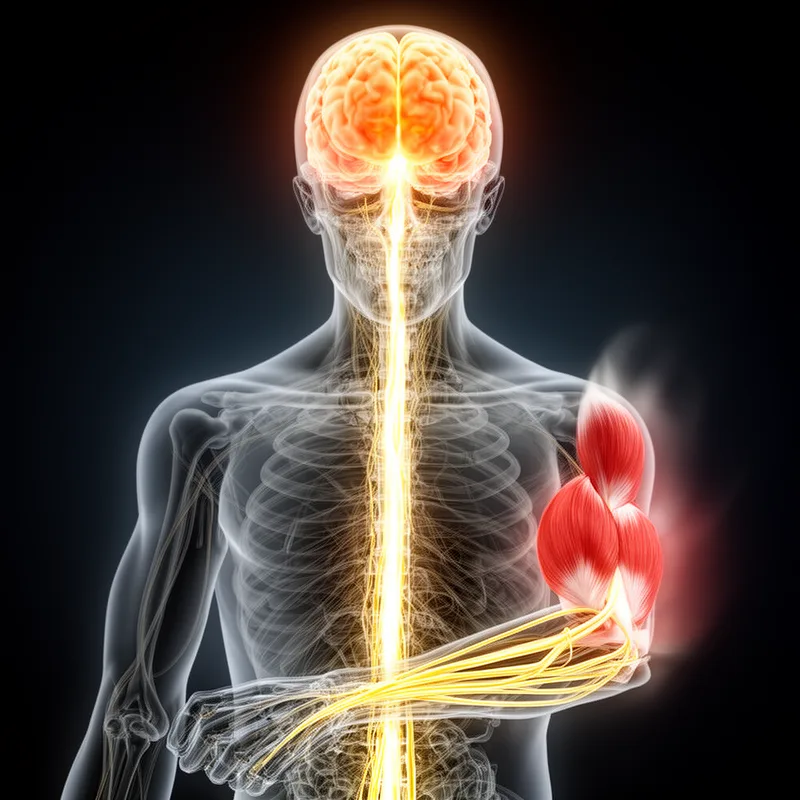
- The efference from the nervous system instructs the heart to increase its rate during exercise.
- efference copy
Examples
-
When you make a movement, your brain sends an efference signal to inform your muscles how to react.
-
A motor-related brain area could send an efference copy of the motor command to the visual cortex in motor coordinates, and the connectivity between axons from the motor-related area and visual neurons could act as the forward model, transforming the signal to visual coordinates.
Academic text (2017) -
There are many different uses that might be made of this efference copy, depending on the type of motor instruction in question.
Academic text (1999) -
So again, the content of the efference copy does not seem to be consciously available.
Academic text (1999) -
"Emotion and Facial Efference: An Ignored Theory
Blog text (15) -
The intentions are assumed to be reflected as efference copies to the representing system.
Academic text (1999) -
Here the efference copy is being monitored by a proto self, the new subject of sensation.
-
Zajonc, R. B., S. T. Murphy, & M. Inglehart, "Feeling and Facial Efference: Implications of the Vascular Theory of Emotion"
Blog text (15) -
Feinberg, Irwin. 1978. "Efference Copy and Corollary Discharge: Implications for Thinking and its Disorders." Schizophrenia Bulletin, 4: 636-640.
Academic text (1999) -
Nonetheless, it is consistent with this to suppose that whether or not a perceived movement is experienced as one's own depends on whether or not there is a match at the comparator between the sensory perception of the movement and an efference copy (Jeannerod in press; cf. Daprati et al. 1997).
Academic text (1999)
Surface Forms
Morphology
efference = efferent (opaque) = ef + fer + ence
The noun is formed from the technical adjective 'efferent' with '-ence', but the components ('ef-' + 'fer') are Latin combining forms not familiar standalone English morphemes, making the formation opaque to average learners.
Etymology
Efference comes from Latin parts ef- 'out' and ferre 'to carry', the same root you see in transfer. Think of efference as a message carried 'out' from the brain to the muscles, which is why it means a nerve signal that sends instructions from the brain to the body.