

to eclipse
 4
5.6
4
5.6

- verb
- /ɪˈklɪps/
- Specialized
- The blood moon will eclipse the sun tomorrow.
- eclipsing binary
- eclipsing star
- eclipsed Moon
Examples
-
In one particular case, the extrasolar planet HD209458b was observed to eclipse its central star.
Academic text (2004) -
The event is so rare that many people travel to see the moon eclipse the sun.
-
Higher and higher it climbed, until it eclipsed the sun and the wind died.
Fiction book (1991) -
The other, partly eclipsing the first, looked angry at being caught.
Fiction book (1994) -
When the moon is fully eclipsed, it typically glows orange.
Academic text (2007) -
If the prophecy is true, in seven days, the sun will be eclipsed by the blood moon.
-
The stars above the plain vanished, eclipsed by reflected sunlight.
Fiction book (1998) -
Likewise, the four moons are eclipsed by Jupiter's shadow once each orbit.
Academic text (2002) -
Periodically, Jupiter eclipses each of the four large moons as they pass into the planet's mammoth shadow.
Academic text (2002) -
The moon will eclipse the sun during the solar event tomorrow.
Synonyms


 1
9.3
1
9.3
To block something from view by passing in front of it
Antonyms

Compounds
 12
3.6
12
3.6
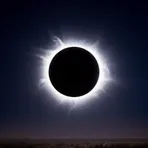
The Moon moves between the Earth and Sun, blocking all or part of the Sun's light


- Specialized
3
4.4
A time when one object in the sky completely hides another from view

- Specialized
1
7.6
The Moon covers the Sun's center and leaves a bright ring of light
 1
5.9
1
5.9
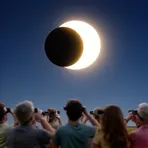
An event when one object in the sky blocks only part of another, leaving some still visible
How Obscured

Surface Forms
Etymology
Eclipse comes from Greek parts ek- 'out' and leipein 'to leave'. It gives the clear picture of something being 'left out' of view or put in shadow, so one body can eclipse another by moving into its shadow.