
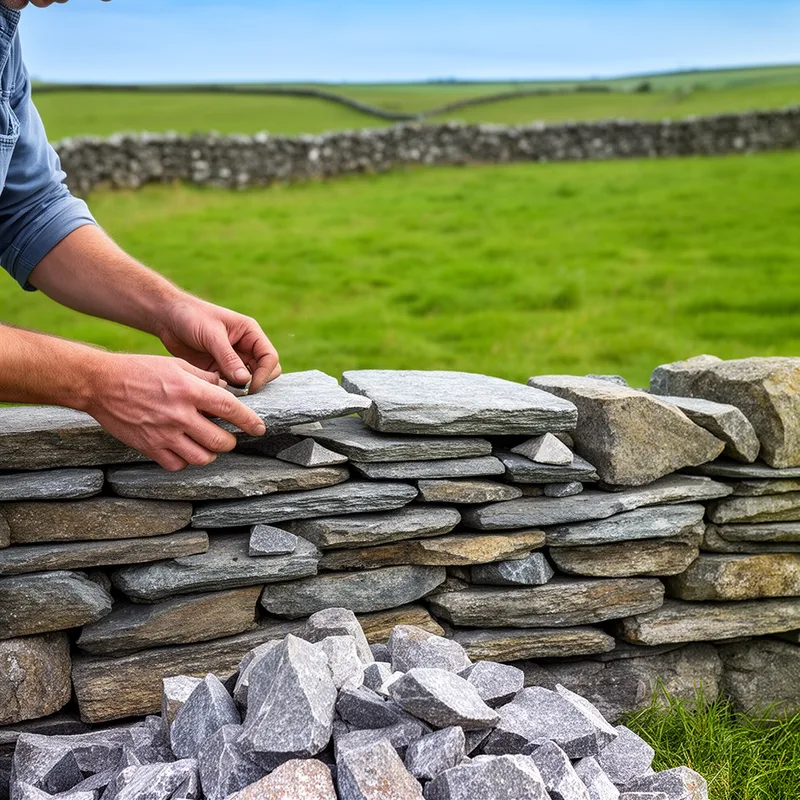
dry walling
- noun
- /draɪ ˈwɔːlɪŋ/
- Specialized
- Traditional farmers practiced dry walling to build field boundaries that would last for generations.
Examples
-
The landscape is dotted with old walls constructed using the dry walling method.
-
Skilled craftsmen are required for dry walling because it demands precision in placing each stone.
-
He specializes in dry walling for outdoor structures.
-
The art of dry walling requires skill and patience.
-
Skilled craftsmen are required for dry walling because it demands precision in placing each stone.
-
The landscape is dotted with old walls constructed using the dry walling method.
-
Traditional farmers practiced dry walling to build field boundaries that would last for generations.
Synonyms
 7
4.4
7
4.4

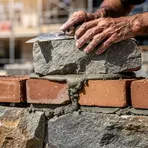
The work of building with stone or bricks
 5
4.2
5
4.2
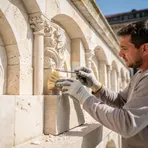
The parts of a building made of stone or the skill of building with stone

A way of building walls by laying stones together without mortar
How Difficult
- Specialized
 23
2.7
23
2.7
Surface Forms
Morphology
The core idea—work involving walls using a ‘dry’ (non-wet) technique—is reasonably derivable from combining 'dry' + 'wall', and many speakers will recognise 'drywall' as the building material (so 'drywalling' = working with drywall). However, the full technical sense (gypsum/plasterboard panels, taping and joint finishing) is specialized and not fully predictable from the constituents alone, and the POS mismatch (wall as noun vs. provided verb sense) may confuse learners, so it is only partially transparent.
Etymology
Dry walling comes from the old craft of stacking stones so they fit together and stay up without any wet mortar; builders choose shapes that lock like a puzzle and the wall stands by weight and shape. So, dry walling means 'building stone walls without mortar'.