
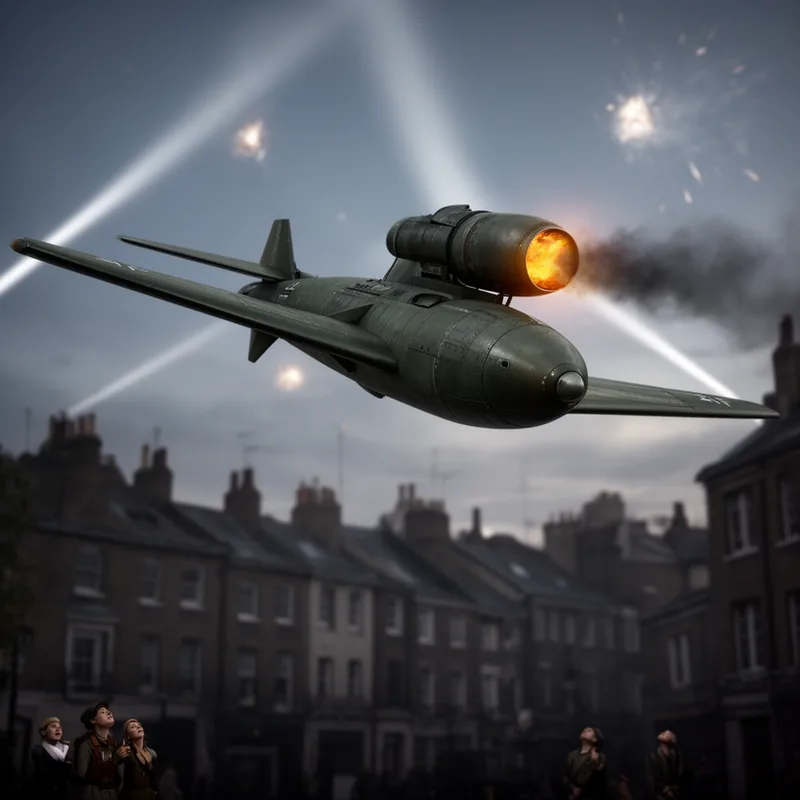
doodlebug
- noun
- /ˈduːdəlˌbʌɡ/
- Archaic
- During World War II, the British developed strategies to counter the German doodlebugs that threatened cities with their destructive power.
Examples
-
In documentaries about World War II, historians often discuss the impact of the doodlebug on civilian populations.
-
During the 1930s and 1940s, Nazi scientists built and tested jet-powered V1s (also known as "doodlebugs" or "buzz bombs") and V2 rockets here.
Academic text (2002) -
The terrifying sound of a doodlebug flying overhead warned residents of imminent danger during the war.
Synonyms

 1
9.9
1
9.9

A German flying bomb used in World War II to attack cities
 1
9.4
1
9.4
A small jet-powered flying bomb used by Germany in World War II to attack cities

 1
7.9
1
7.9
A small flying machine with wings that carries a bomb to a target
A missile with wings and a jet engine that carries explosives to a target without a person on board
Surface Forms
Morphology
Etymology
Doodlebug was the popular nickname for the V-1 flying bomb because people heard its loud, buzzing engine and thought of a flying 'bug'; the name mixes doodle ('a silly or aimless movement') and bug ('insect'). A helpful way to remember is that the missile sounded and moved like a dangerous buzzing 'bug', so people called that small jet-propelled bomb a 'doodlebug'.