

disfigurement
 9
7.3
9
7.3

- noun
- /dɪsˈfɪɡərmənt/
- After the accident, she had to cope with a noticeable disfigurement that changed her appearance permanently.
- facial disfigurement
- risk of disfigurement
Loading YouTube…
Watch on YouTubeAnd so I didn't acknowledge feelings of regret or disgust at my own disfigurement until two years later.
- And so I didn't acknowledge feelings of regret or disgust at my own disfigurement until two years later.
Examples
-
Your formula may work on internal cells, but it causes violent disfigurement to sensitive exposed skin areas.
-
Gorda pinched her loose skin and cried at the disfigurement of her stomach.
Fiction book (2002) -
What such a woman fears is disfigurement
-
-could that not result in death, or, at the absolute least, horrible disfigurement?
-
But he could tell, even before this disfigurement, she probably hadn't been pretty.
Fiction book (1998) -
He might have some kind of facial disfigurement.
-
"Owing to a disfigurement of the most extreme nature, Mr. Merrick has never been properly presented to London society.
-
My first husband remarked that despite my disfigurement, I had a softness of skin that distinguished me from others.
Fiction book (2000) -
Treatment is reserved for hemangiomas that obstruct vital structures or cause significant disfigurement.
Academic text (2015) -
Now the rising had spread to Ebbw Vale, condemning Gwen to death or disfigurement.
Fiction book (1999)
Synonyms
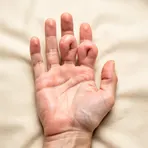 31
6.1
31
6.1
A part of the body that has an unusual shape due to birth, injury, or disease
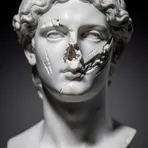 7
7.9
7
7.9
Damage to the outside of something that makes it look spoiled
 1
7.4
1
7.4
Damage to the surface or appearance of something, often done on purpose


 1
8.0
1
8.0
Damage to the look of something that makes it seem broken or ugly
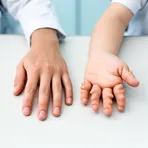
A condition when a body part has an unusual shape, for example a hand or nose

A physical problem in the shape of a body part often present at birth
How Disfigured

Surface Forms
Morphology
disfigurement = disfigure (semi-transparent) = dis + figure + ment
The suffix '-ment' transparently forms a noun meaning the state or result of disfiguring from the verb 'disfigure'.
Etymology
Disfigurement comes from the parts dis- ('not' or 'away') and figure ('shape' or 'form'), so it means spoiling or taking away a shape. That's why disfigurement describes when a person's face or body is damaged and their appearance is changed.