
diploid
- noun
- /ˈdɪp.lɔɪd/
- Specialized
- Thus, if all genes and alleles were expressing active products, a very different outcome from controlled crosses among polyploids would be expected compared with that in diploids.
Examples
-
Such a difference in breeding systems may explain in part the geographic success of polyploids relative to diploids.
Academic text (2002) -
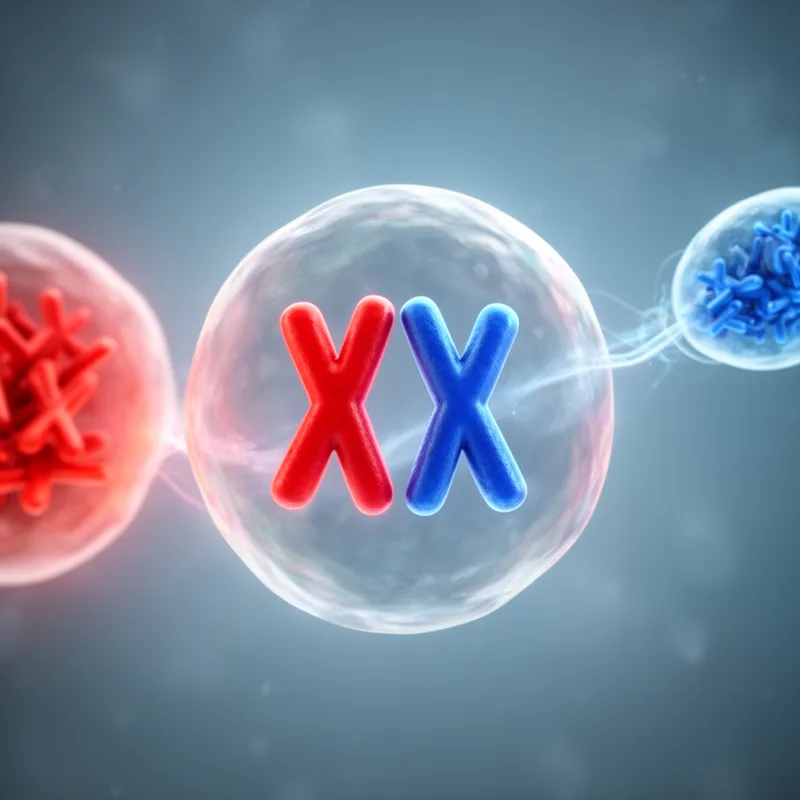
We start again with the diploid parental cell.
-
So female bees are all diploid, and male bees are all haploid.
-
And eukaryotes also are diploids, which is not the case in prokaryotes.
-
This now well-documented observation has important implications at the population level, where the evolutionary opportunities and parameters relating to diploids are quite different from those of polyploids.
Academic text (2002) -
Assuming that different genes should produce slightly different enzyme products, Gottlieb concluded that polyploids should have more isozymes (more gene products) than diploids.
Academic text (2002) -
The scientist explained that a diploid organism has two complete sets of chromosomes inherited from each parent.
-
In the genetic experiment, they studied the characteristics of diploids compared to haploids with only one set of chromosomes.
-
For his research, he focused on diploids, noting their stability due to having pairs of chromosomes.
How Polyploid
- Specialized

- Specialized
- Specialized
- Specialized
Surface Forms
Morphology
diploid = di + ploid
Formally analyzable as the combining prefix 'di-' (two) + the combining form 'ploid' (relating to fold/set), but these are technical combining forms rather than common standalone English words, so the relation is clear to learners with scientific vocabulary but not to average learners.
Etymology
Diploid comes from Greek parts di- meaning 'two' and -ploid meaning 'fold' or 'layer', so it literally means 'double' or 'twofold'. That's why a diploid cell or organism has two complete sets of chromosomes, one set from each parent.

