
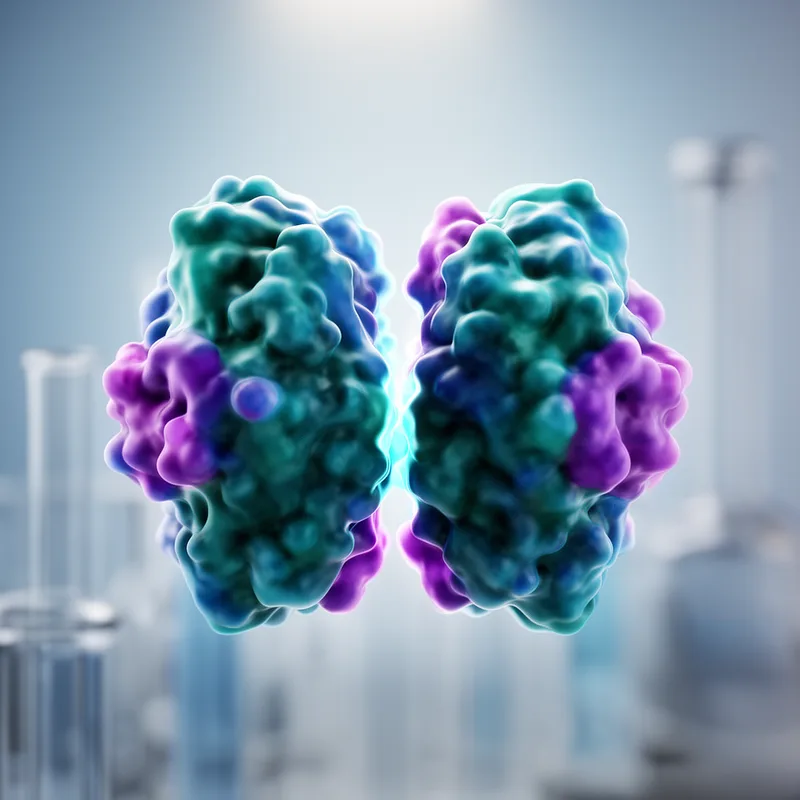
dimeric
- adjective
- /daɪˈmɛrɪk/
- Specialized
- In the study of cell biology, a dimeric structure often refers to two similar molecules linked together.
- dimeric MPO
- monomeric and dimeric
Examples
-
IL-12, a dimeric cytokine composed of the subunits p40 and p35, plays a critical role in the differentiation of Th1 cells.
Blog text (17) -
And what happens is that PDGF, which for example can be itself a dimer, it's can be a dimeric growth factor.
-
As a dimeric IN species is required for 3'-processing, the strand transfer step calls for a tetrameric IN arrangement.
Blog text (19) -
MDH is a dimeric enzyme comprising cytosolic (s-MDH) and mitochondrial (m-MDH) subunits.
Academic text (2013) -
The dimeric protein consists of two identical subunits that work together to function effectively.
-
The scientist explained that the dimeric form of the enzyme is more active than its monomeric counterpart.
How Many Parts


 1
7.7
1
7.7

- Specialized
- Specialized
- Specialized
- Specialized
- Specialized
- Specialized
Surface Forms
Morphology
Etymology
The word dimeric comes from the parts di- meaning 'two' and -mer meaning 'part', the same di- you see in dioxide and the -mer you see in polymer. So dimeric means made of two similar parts joined together, like two protein pieces connected as one.