
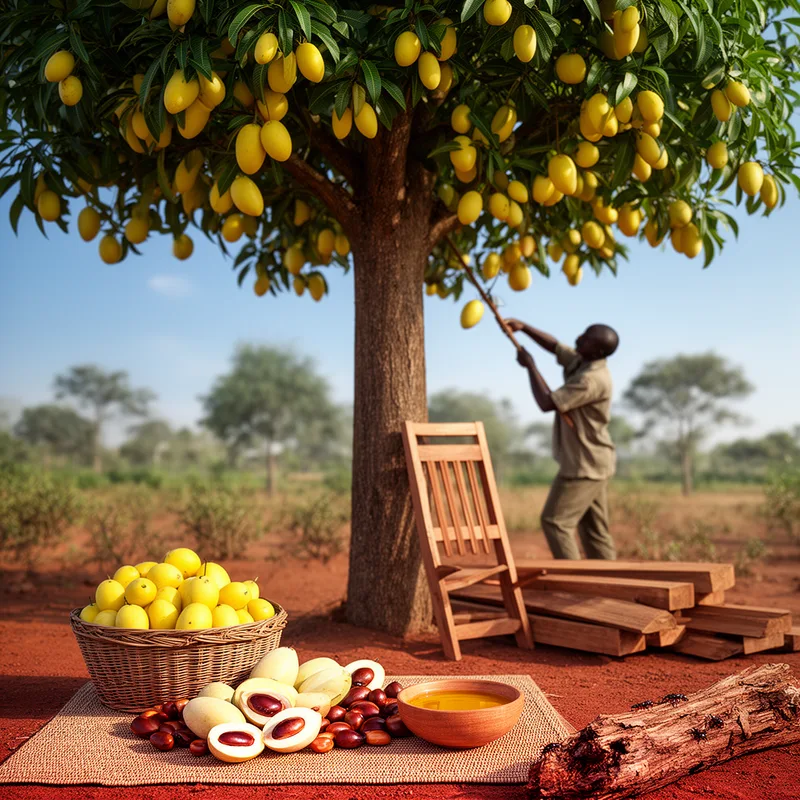
dika
- noun
- South African
- The dika tree produces fruit that is an important food source in many African communities.
Examples
-
The hard wood of the dika is often used for making furniture due to its resistance to termites.
-
The dika tree grows in many parts of West Africa.
-
Farmers plant dika to harvest both the fruit and the valuable oil-rich seeds.
-
I tasted a dika fruit for the first time yesterday.
-
The dika tree is known for its nutritious yellow fruit, which is often used in local dishes.
-
Many communities in Africa rely on the seeds of the dika for oil extraction and cooking.
-
The wood of the dika tree is highly prized for its durability and resistance to termites.
Synonyms
An African tree with yellow fruit like a mango, oil-rich seeds, and hard wood that resists termites
A tree from Africa with yellow fruit, oily seeds, and hard wood that resists termites

An African tree that makes yellow fruit like mangoes, has seeds used for oil, and strong wood that resists termites
Compounds
- South African
A soft brown paste made from roasted wild mango seeds used as food and to thicken soups

Surface Forms
Etymology
Dika comes from West Africa, where people used that local name for a tree with mango-like fruit and oil-rich 'nuts'. That's why in English dika still means this African tree and its valuable seeds.

