

wild mango tree
- noun
- South African
- Villagers often use the seeds from the wild mango tree to extract valuable oil.
Examples
-
Furniture made from wild mango tree wood is resistant to termite damage.
-
The bright yellow fruit of the wild mango tree is a favorite among the local wildlife.
-
The wild mango tree grows abundantly in several regions of West Africa.
-
The wild mango tree grows in many parts of Africa.
-
I saw a wild mango tree near the river.
-
Ants often make their nests in the hollow trunk of the wild mango tree due to its durable wood.
-
Craftsmen appreciate the wild mango tree for its strong wood, which makes excellent furniture.
Synonyms
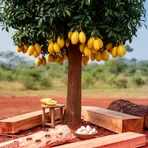
An African tree with yellow fruit like a mango, oil-rich seeds, and hard wood that resists termites
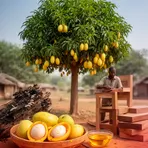
A tree from Africa with yellow fruit, oily seeds, and hard wood that resists termites
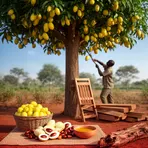
A West African tree that has yellow mango-like fruit, oil-rich seeds, and hard termite-resistant wood
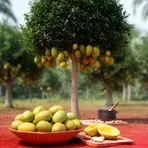
A tropical tree like a wild mango with edible fruit and seeds
Surface Forms
Morphology
The noun phrase is a straightforward composition of 'wild' (not domesticated) + 'mango' (the mango tree/fruit) + 'tree', so its referent — a mango-type tree growing in the wild — is directly derivable from the parts and standard adjective+noun compounding in English. There is no idiomatic or metaphorical shift, and the construction is cross-linguistically transparent, so a B1 learner who knows the constituent words will readily understand it.
Etymology
Wild mango tree is a simple name: the plant grows wild, its fruit looks like a mango, and it is a useful tree. That's why the name now means a wild African tree whose seeds give oil and whose strong, termite-resistant wood is used for furniture.

