
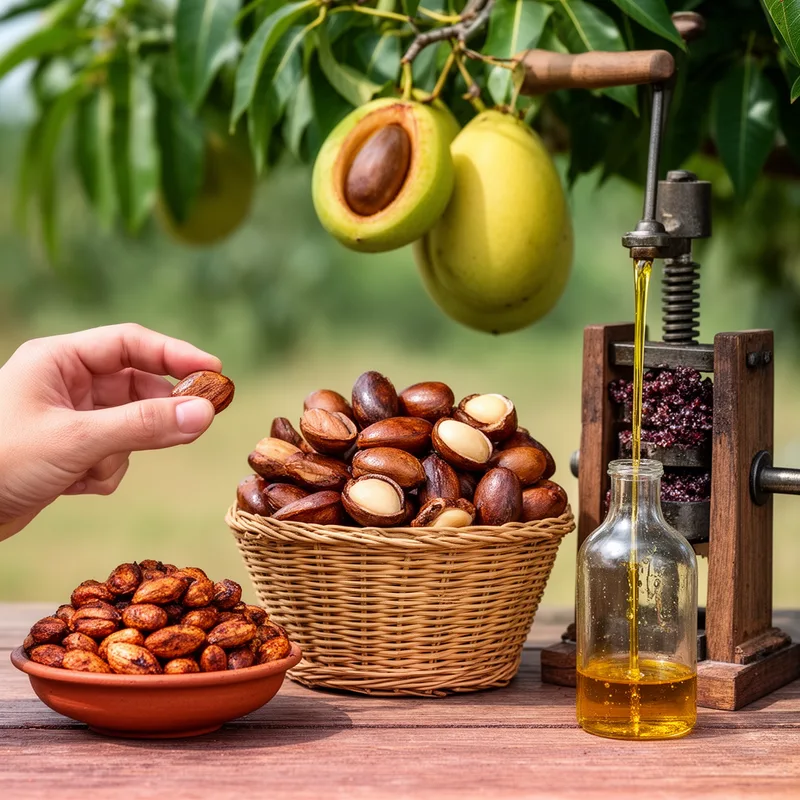
dika nut
- noun
- UK
- The locals harvested dika nuts from the forest to press for oil.
Examples
-
The market sells bags of roasted dika nuts as a popular snack.
-
She added ground dika nuts to the soup to thicken its consistency.
-
The dika nut is rich in nutrients.
-
I love the taste of dika nuts!
-
The locals harvested dika nuts from the forest to press for oil.
-
The market sells bags of roasted dika nuts as a popular snack.
-
She added ground dika nuts to the soup to thicken its consistency.
Synonyms

A hard-shelled palm nut that gives oil and has an inside you can eat

A soft oily fruit from the rabbitwood tree used for oil
How Oily


Surface Forms
Morphology
The meaning is compositionally derived from 'dika' (an African tree) + 'nut' (an edible seed); noun–noun compounds commonly denote the seed or product of the named plant. A B1 learner who knows both constituents would readily infer that a 'dika nut' is the edible seed of the dika tree (including its use for food/oil), so the expression is transparent.
Etymology
Dika nut comes from a local name for a wild mango tree; people pressed the oily dika seeds to make oil or ground them to thicken soups. That's why dika nut means the edible, oil-rich seed used as food and for oil.