

to dig in
 29
6.9
29
6.9

- phrasal verb
- /dɪɡ ɪn/
- As the enemy approached, we had no choice but to dig in and hold our position.
- dig in their heels
- troops dug in
- dug in Iraqi forces
Loading YouTube…
Watch on YouTubeAnd it just drove me to just dig in and, and, and fucking fight.
- And it just drove me to just dig in and, and, and fucking fight.
- Well, now, now Mnuchin says no, no, each side has dug in.
- But but, but the way things are now, if you show me that I'm wrong, I dig in further and now you're of a greater threat.
- And we were going in to basically dig in underground to an area that overlooked a, a main supply route.
Examples
-
Hungarian forces, though outnumbered, are dug in on the high ground and impossible to dislodge.
-
For three days, the regiment had been here, dug in and terrified.
Fiction book (1990) -
Should we find a hole and dig in?
-
Bring the military home and dig in; it's only a few years away at best.
Blog text (15) -
Set your house in order and dig in for the battle to survive.
-
Our boys are dug in on the other side.
-
- If we dig in, we could probably hold them off indefinitely.
-
It's the hardest part of any strike, when both sides are dug in and neither side's gonna budge.
-
Outside Shanghai, the Japanese dug in and waited... ...for Pearl Harbor.
-
The Syrians were unwilling to proceed with the armistice talks unless Israel withdrew from Government House, but the Israelis dug in and refused to leave.
Academic text (2016)
Synonyms
 6
7.2
6
7.2
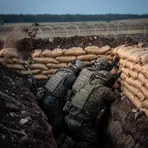
To put soldiers in a protected position behind earth or sandbags

To dig a trench to make a position stronger to defend it
Antonyms

How Fortified

Surface Forms
Morphology
The sense 'to start eating eagerly' is a metaphorical extension of the literal image of 'dig' (to penetrate or plunge into something) plus 'in' (into), so a learner could plausibly infer the action of plunging into food. However, the specific idiomatic sense of beginning a meal enthusiastically is not a direct, fully predictable composition of the parts and relies on pragmatic/gestural imagery, so it may not be immediately clear to all B1 learners without prior exposure.
Etymology
Dig in comes from soldiers who literally dig in to the ground to make a trench or simple shelter to protect themselves in a fight. So the phrase now means 'to prepare a defensive position'.