
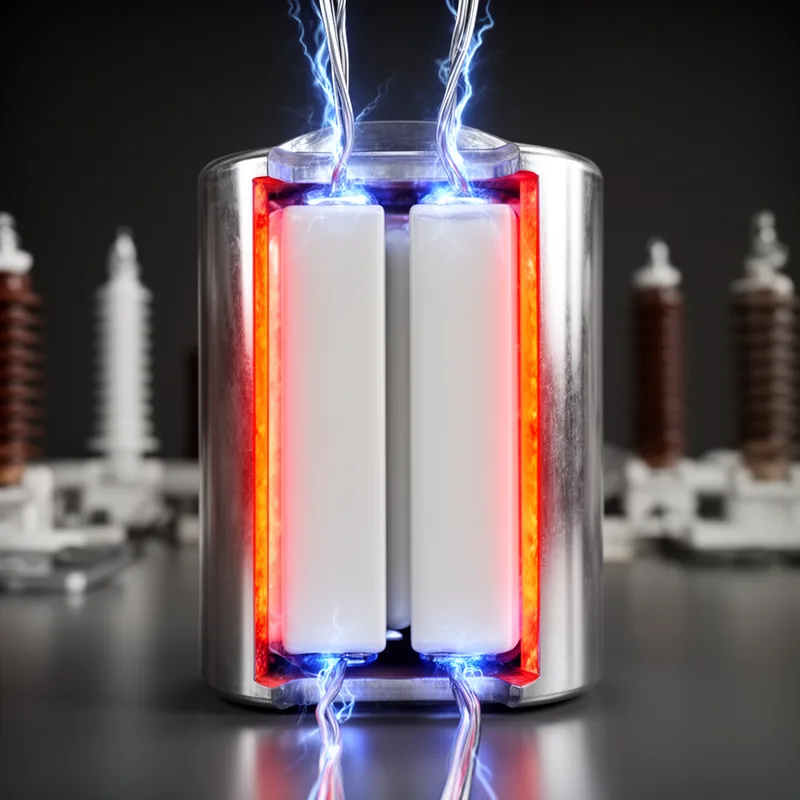
dielectric


 1
9.3
1
9.3
- noun
- /ˌdaɪəˈlɛktrɪk/
- Specialized
- Current designs utilize a hybrid design, with multiple layers of copper wiring and polyimide dielectric deposited onto a cofired ceramic base containing less critical wiring levels.
- polyimide dielectric
- dielectric, ferroelectric
- dielectric around the conductors
Loading YouTube…
Watch on YouTubeFirst, they grow this very thin film of a dielectric layer on the surface.
- First, they grow this very thin film of a dielectric layer on the surface.
- And to enhance the absorption in this very thin layer, what we do is we put in high index dielectric layer with a grating on top.
Examples
-
In this case, high-resistivity semiconducting films can also be treated as a dielectric.
Academic text (2018) -
This is the dielectric constant, the dielectric constant of silicon.
-
So there is a dielectric response that is different.
-
Selection of the dielectric and details of dielectric processing are beyond the scope of the paper.
Academic text (1998) -
And so you would have a metal gate with a high K dielectric and the dielectric that's bad.
-
Yeah, varying density, varying dielectric constant, and so forth.
-
The critical wiring, which consists of five levels of copper lines with a polyimide dielectric, is deposited on top of this base.
Academic text (1998) -
Electrical specifications for conductor and interlevel dielectric require that metal and dielectric thicknesses, as well as metal linewidths, must be precisely controlled.
Academic text (1998) -
MCM-D uses thin metal films and an organic dielectric over a rigid-base substrate such as silicon or aluminum nitride.
Academic text (1998) -
The capacitor uses a special dielectric material to prevent electrical conduction.
Synonyms
 5
4.7
5
4.7
A material like glass that does not let electricity or heat pass through
A material that does not let electricity or heat pass through it
Compounds

- Specialized
Heating an insulating material with a high-frequency electric field that makes molecules move and heat up
How Insulating

Surface Forms
Morphology
Etymology
Dielectric comes from the prefix dia- meaning 'through' and the word electric, which is the same root as electricity. A helpful way to remember it is that a dielectric lets the effect of electricity pass across it but does not let electric current flow, so it works as an insulator in things like capacitors.