
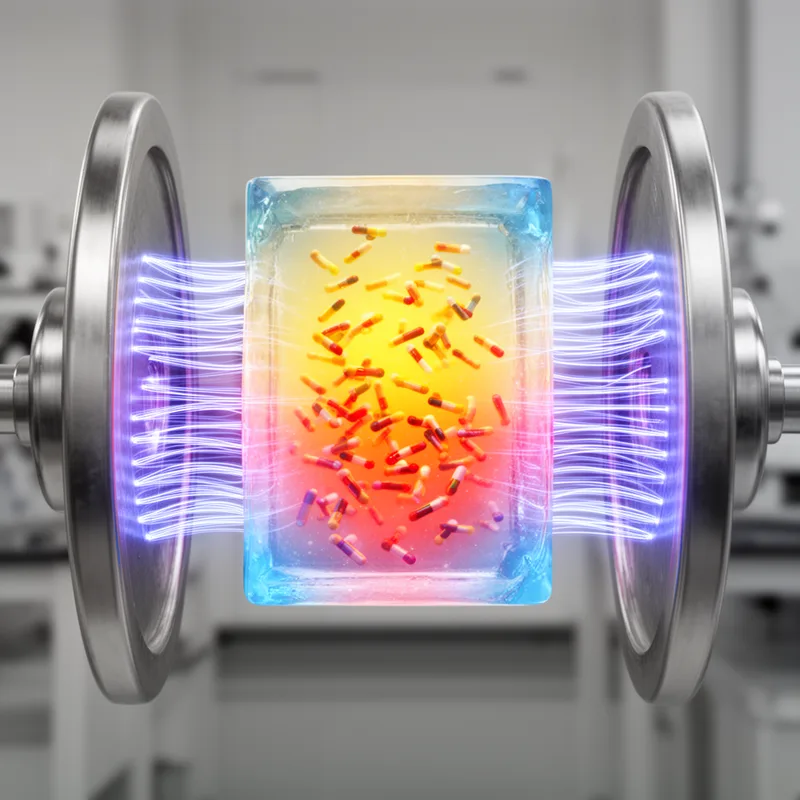
dielectric heating
- noun
- /ˌdaɪəˈlɛktrɪk ˈhiːtɪŋ/
- Specialized
- Industrial microwave ovens use dielectric heating to rapidly process large quantities of food.
Examples
-
Some types of plastic welding rely on dielectric heating to bond materials without direct contact.
-
The effectiveness of dielectric heating lies in its ability to rapidly generate heat by oscillating the molecules of insulating materials.
-
Because dielectric heating directly warms the material, it is more efficient than traditional surface heating methods.
-
The process of dielectric heating is used in many industrial applications.
-
Can you explain how dielectric heating works?
-
Industrial microwave ovens utilize dielectric heating to cook food evenly by exciting the molecules of the material.
-
In manufacturing, dielectric heating is essential for processes like plastic welding, as it allows for efficient bonding without direct contact.
Surface Forms
Morphology
The meaning 'heating of an insulating material' is directly and compositionally derived from 'dielectric' (an insulating substance) + 'heating' (the process of raising temperature). Although the term is technical, the noun+noun combination follows a transparent compositional pattern that a learner who knows both constituents can infer.
Etymology
Dielectric heating comes from the image of a material that does not carry electricity called a dielectric, whose tiny parts are made to move and rub when an electric field changes quickly, and this rubbing makes the heating happen. So, the term means 'heating that happens when an electric field makes a material that does not carry electricity warm from inside'.

