
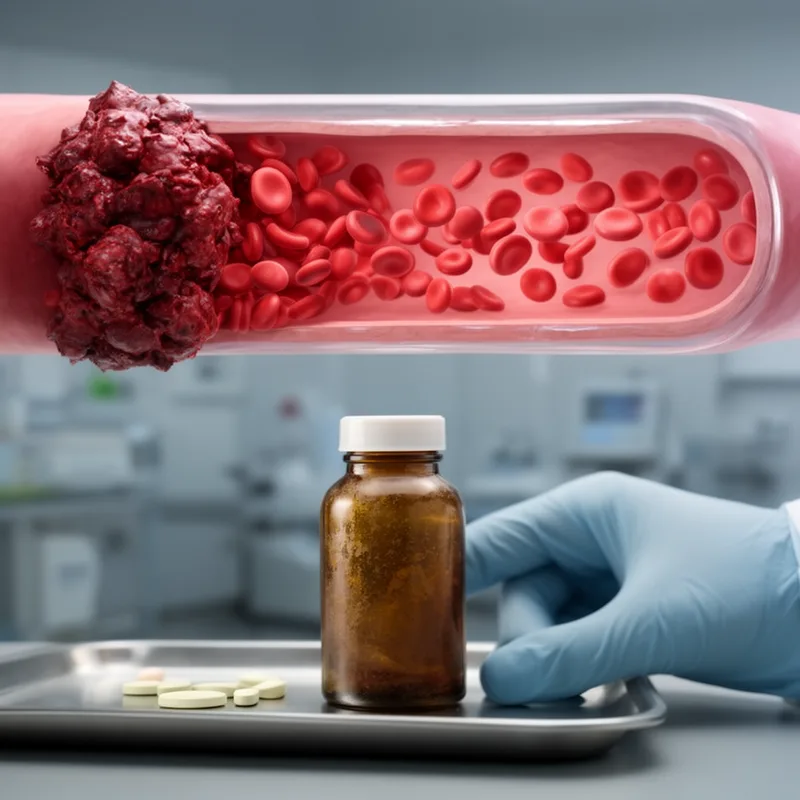
dicumarol
- noun
- /ˈdaɪkjuˌmɛrɒl/
- Archaic
- Researchers studied the efficacy of dicumarol in treating patients at risk of thrombosis.
Examples
-
The use of dicumarol as a blood-thinning agent declined after the introduction of safer alternatives.
-
Some early anticoagulant therapies included dicumarol, but it was later replaced due to safety concerns.
-
The doctor prescribed dicumarol for my condition.
-
Many patients were once treated with dicumarol.
-
Doctors used dicumarol to prevent blood clots in patients after surgery.
-
Before warfarin became common, dicumarol was the main anticoagulant prescribed for heart patients.
-
The medication dicumarol was important in the treatment of deep vein thrombosis.
Synonyms

 8
5.6
8
5.6

A medicine that slows or stops blood from forming clots

A chemical that prevents blood from clotting and is used as a medicine

A medicine that stops or slows blood from forming clots

A substance that stops or slows blood from forming clots
Surface Forms
Etymology
Dicumarol comes from the parts di- ('two') and coumarin, a plant chemical found in sweet clover. A helpful way to remember it is to think of a 'double' form of coumarin that was found when spoiled clover made animals bleed, so dicumarol became the name for an early blood-thinning drug.