

decoagulant
- noun
- /ˌdiːˈkoʊɡjʊlənt/
- Specialized
- Patients taking a decoagulant should have their blood monitored regularly.
Examples
-
The doctor administered a decoagulant to prevent further blood clots after the surgery.
-
Research is ongoing to develop safer decoagulant medications for people at risk of thrombosis.
-
The doctor prescribed a decoagulant for my condition.
-
Patients on a decoagulant should monitor their blood levels regularly.
-
The doctor administered a decoagulant to prevent blood clots during the patient's treatment.
-
Patients taking a decoagulant must be cautious about their diet to avoid complications.
-
Research is focused on improving decoagulant therapies for treating blood disorders.
Synonyms

 17
5.8
17
5.8

A natural body substance that stops blood from forming clots and is used as medicine
 8
5.6
8
5.6
A medicine that slows or stops blood from forming clots
 1
5.5
1
5.5
Treatment that stops blood from forming clots

A medicine that stops or slows blood from forming clots
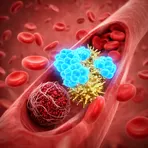
A protein that helps stop blood clots by blocking some blood proteins
Antonyms

- Specialized
3
8.1
Something that makes a liquid like blood or milk become thick and form clots
Surface Forms
Morphology
Etymology
The word decoagulant breaks into de- meaning 'remove' and coagulate meaning 'to form a clot' or 'to curdle' like milk. So a decoagulant is a substance that prevents or slows blood from forming clots.