
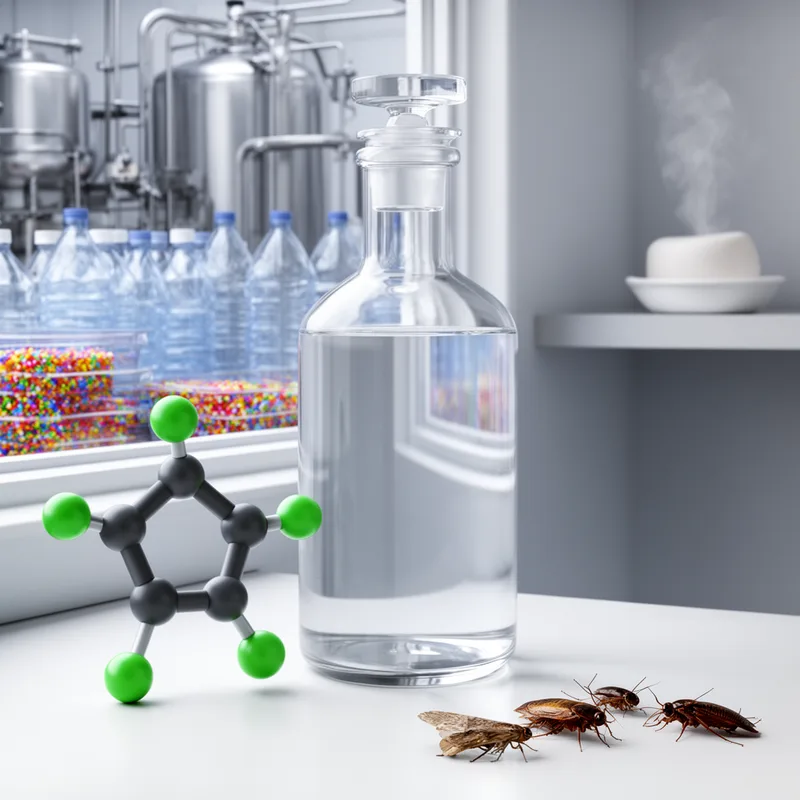
dichlorobenzene


 1
9.8
- noun
- /daɪˌklɔːrəˈbɛnziːn/
- Specialized
- Many manufacturers rely on dichlorobenzene for its solvent properties.
Examples
-
The factory stores large quantities of dichlorobenzene for use in manufacturing plastics.
-
Exposure to dichlorobenzene should be minimized due to potential health risks.
-
Chemists often use dichlorobenzene as a solvent in laboratory experiments.
-
The dichlorobenzene compound is widely used in industrial applications.
-
In the production of air fresheners, many manufacturers use dichlorobenzene as a key ingredient.
-
The laboratory tested samples for the presence of dichlorobenzene to assess environmental contamination.
-
She learned that dichlorobenzene is effective as a pesticide for controlling household pests.
Synonyms
 1
9.9
A white poisonous chemical used in mothballs to keep insects away
Surface Forms
Morphology
dichlorobenzene = chlorobenzene (semi-transparent) = di + chloro + benzene
Formation follows regular chemical naming (di- indicating two + chlorobenzene), but the combining forms are technical and may be unfamiliar to general learners.
Etymology
The word dichlorobenzene breaks into parts: di- 'two', chloro- 'chlorine', and benzene 'a ring-shaped chemical'. So it means a benzene ring with two chlorine atoms attached, which is why the name describes the chemical you find in factories, deodorizers, and pesticides.