

benzene
 17
6.2
17
6.2

- noun
- /ˈbɛnziːn/
- Specialized
- Manufacturers often use benzene as a starting material in the production of various chemicals.
- benzene toxicity
- benzene concentration
- benzene metabolite
Loading YouTube…
Watch on YouTubeHow many harbons atoms in benzene, right?
- How many harbons atoms in benzene, right?
Examples
-
Nitrogen dioxide (NO2) and benzene were measured with passive samplers covering the study areas.
Academic text (2012) -
The particles include those from tar, nicotine, benzene, and benzpyrene.
Academic text (1992) -
And they have benzene in the air at 55 times the public health standard.
-
And finally, what if we have benzene as the substituent?
-
An increase in the benzene and naphthalene concentrations in the crude gas was noted.
Academic text (2000) -
EPA will model the risk assessment of HAPs using the approach found in the 1989 benzene NESHAP.
Academic text (2001) -
Examples of VOMs include industrial chemicals such as benzene, perchloroethylene, toluene, and xylene.
Academic text (2007) -
NO2 and benzene are considered markers of toxic air pollutants rather than potential causative agents themselves.
Academic text (2012) -
24 These cancer-causing emissions include diesel particulates, butadiene, benzene, and formaldehyde.
Academic text (1994) -
Exposure to volatile aromatic hydrocarbons (e.g., benzene) results in respiratory distress and unconsciousness.
Academic text (2009)
Synonyms
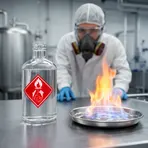
A colorless, very flammable chemical liquid that can cause cancer
Compounds

- Specialized

 1
5.4
1
5.4
A ring of six carbon atoms, each joined to a hydrogen, found in many organic molecules

- Specialized
A diagram showing six carbon atoms in a ring, each attached to one hydrogen

Surface Forms
Morphology
benzene = benz + ene
Formed from the chemical combining form 'benz-' and the technical suffix '-ene'; the meaning is specialized and not derivable by an average B1 learner from common English base words.
Etymology
Benzene comes from benzoin, the name of a fragrant resin once called 'gum of Java', plus the chemical ending -ene used for certain hydrocarbons. So benzene was named because chemists first found it in smelly resins and because it is a simple hydrocarbon, which helps explain its strong aroma and its use in making other chemicals.