

dibranchiate
- noun
- /ˌdaɪˈbræŋkiət/
- Specialized
- The dibranchiate molluscs, such as squids and octopuses, possess only two gills.
Examples
-
Unlike the dibranchiates, nautiluses belong to a separate subclass with four gills.
-
Marine biologists study dibranchiate anatomy to understand cephalopod evolution.
-
The dibranchiate species are fascinating to study.
-
Many dibranchiate animals, like squids, are found in deep oceans.
-
Marine biologists study dibranchiate anatomy to understand cephalopod evolution.
-
The dibranchiate molluscs, such as squids and octopuses, possess only two gills.
-
Many dibranchiate animals, like squids, are found in deep oceans.
Synonyms
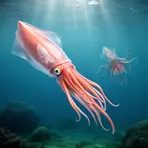
A sea animal with two gills like a squid or octopus
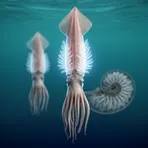
A sea animal like a squid or octopus that has two gills
Compounds
Surface Forms
Morphology
dibranchiate = branchiate (semi-transparent) = di + branchi + ate
The formation di- (two) + branchiate (having gills) is morphologically regular, but both elements are technical and unfamiliar to most learners.
Etymology
Dibranchiate comes from the prefix di- meaning 'two', as in bicycle, and branchia meaning 'gills', so it literally means 'two-gilled' and describes sea animals like squids and octopuses that have two gills.

