

dibranchiate mollusk
- noun
- /ˌdaɪˈbræŋkiət ˈmɒləsk/
- Specialized
- The squid is a well-known example of a dibranchiate mollusk found in oceans globally.
Examples
-
Biologists study dibranchiate mollusks to understand their unique methods of locomotion and camouflage.
-
Many dibranchiate mollusks exhibit remarkable camouflage abilities.
-
Unlike the extinct belemnites, most living cephalopods are dibranchiate mollusks.
-
The dibranchiate mollusk is known for its advanced nervous system.
-
The squid is a well-known example of a dibranchiate mollusk found in oceans globally.
-
Biologists study dibranchiate mollusks to understand their unique methods of locomotion and camouflage.
-
Many dibranchiate mollusks exhibit remarkable camouflage abilities.
Synonyms

A sea animal like a squid or octopus that has two gills
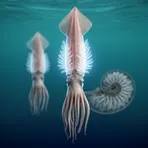
A sea animal like a squid or octopus that has two gills
Surface Forms
Morphology
The phrase is directly compositional: 'dibranchiate' (having two gills) modifies 'mollusk' (a soft-bodied invertebrate), so the meaning 'mollusk with two gills' follows straightforwardly from the constituents. This adjective+noun pattern is a regular morphological composition found cross-linguistically, so a learner who knows both words can reliably infer the MWE meaning.
Etymology
Dibranchiate mollusk comes from two old parts: di- meaning 'two' and branchia meaning 'gill', so it literally names a mollusk with two gills. That's why the term refers to animals like squids and octopuses that have two 'gills'.

