
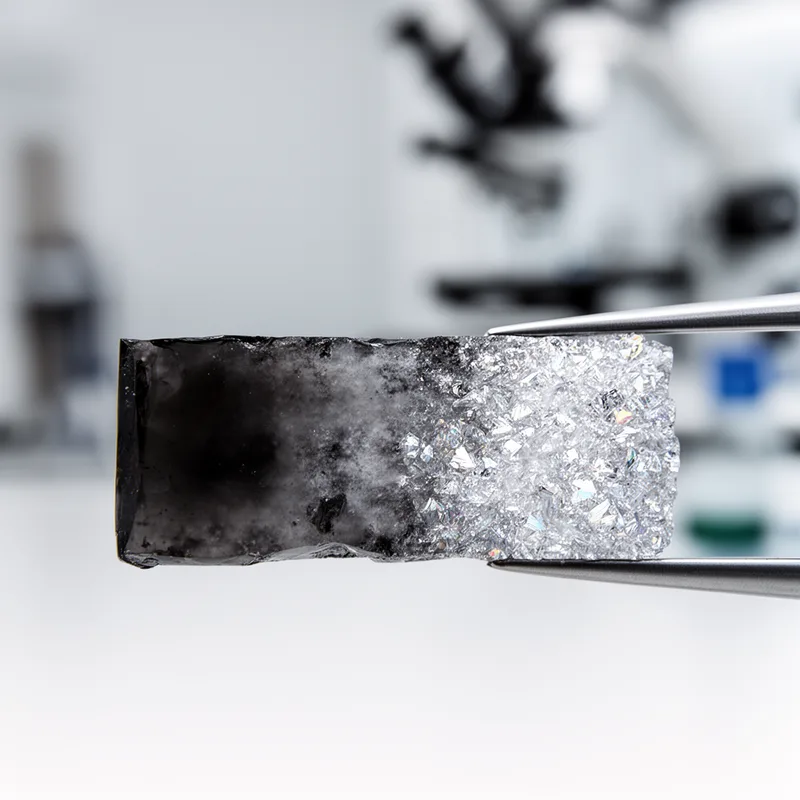
to devitrify
- verb
- /dɪˈvɪtrɪfaɪ/
- Specialized
- Some ceramics devitrify when reheated, affecting their transparency and strength.
Examples
-
The scientist observed that the sample began to devitrify during the cooling process.
-
Over time, the surface of the volcanic glass will devitrify due to exposure to moisture.
-
The heat can devitrify the glass.
-
How does high temperature devitrify the material?
-
Over time, the surface of the volcanic glass will devitrify due to exposure to moisture.
-
Some ceramics devitrify when reheated, affecting their transparency and strength.
-
The scientist observed that the sample began to devitrify during the cooling process.
Synonyms

 5
6.0

To form crystals, like salt or sugar from a liquid
 1
7.4
Form new crystals in a material after heating or melting
Surface Forms
Morphology
Etymology
Devitrify comes from the prefix de- meaning 'remove' and a root from vitrum meaning 'glass', so it means 'remove the glass'. It describes when a glassy material turns into small crystals, which is why to devitrify is to change from a glassy state into a crystalline one.