
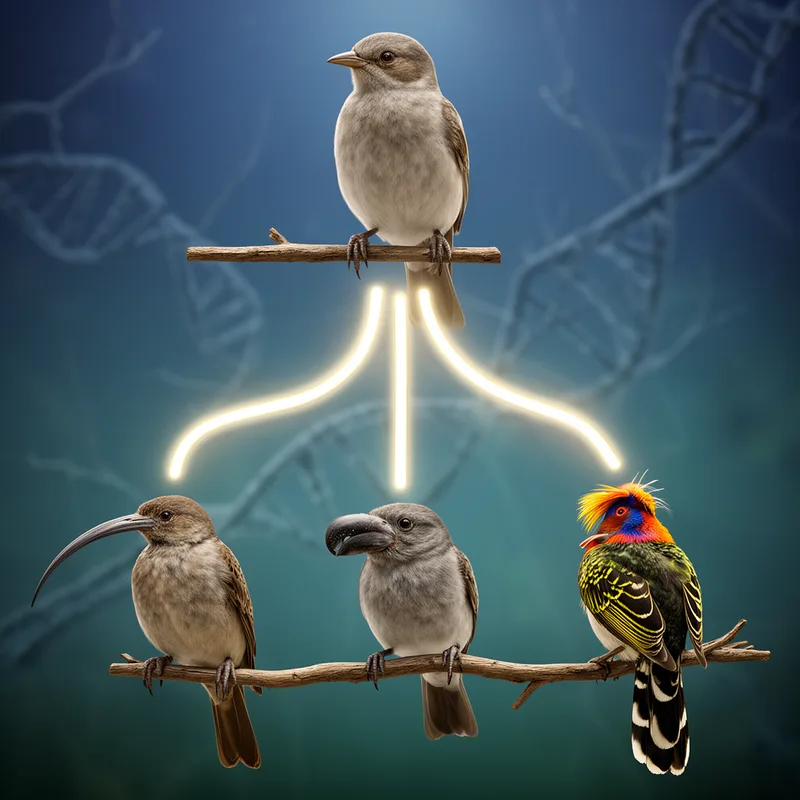
descendant
- adjective
- /dɪˈsɛndənt/
- The descendant language retained only a few features of its ancestor.
Examples
-
Geneticists are studying the descendant line of the population to track mutations.
-
This species has developed several descendant traits over generations.
-
The descendant of the ancient kings still lives in the same village.
-
Is she a descendant of the famous artist?
-
The descendant language retained only a few features of its ancestor.
-
Geneticists are studying the descendant line of the population to track mutations.
-
This species has developed several descendant traits over generations.
Synonyms

 10
5.4
10
5.4

A right or title a family gives to their children by law
 1
8.0
1
8.0
Directly related to an ancestor

Coming from an ancestor or earlier family member
How Related

Surface Forms
Morphology
Etymology
The word descendant as an adjective also comes from Latin descendere, from de- 'down' and scendere 'to climb'. So if a language or species is 'descendant' it 'comes down' from an earlier one.