
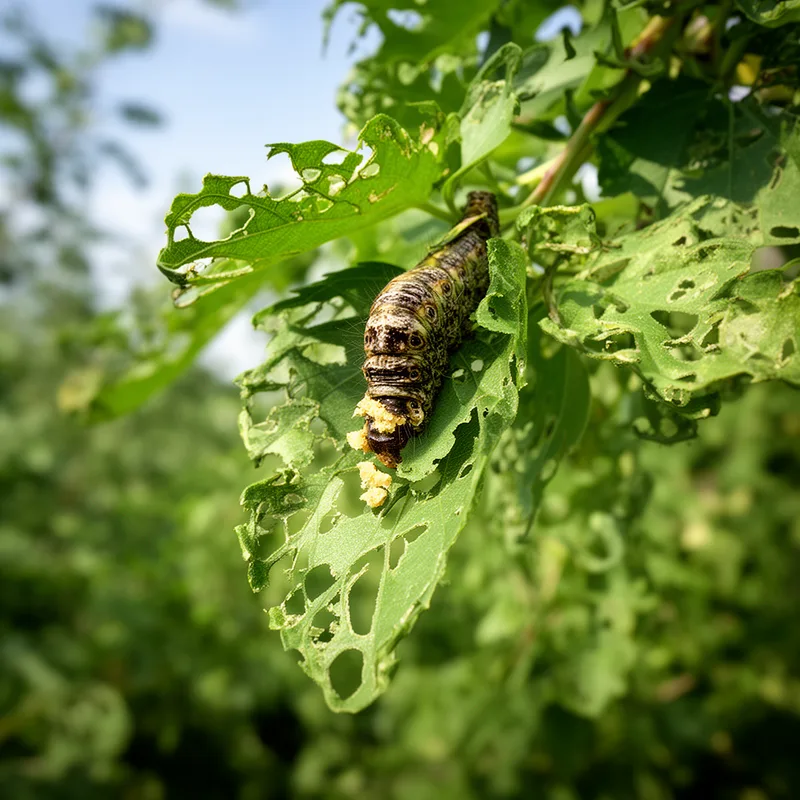
defoliator
 1
9.7
1
9.7

- noun
- /dɪˈfoʊliˌeɪtər/
- Specialized
- Farmers often try to control defoliators to protect their crops from damage.
Examples
-
The defoliator caused significant damage to the crops.
-
Farmers struggle to control defoliators that threaten their crops each summer.
-
Some defoliator outbreaks can devastate entire ecosystems if not managed quickly.
-
The gypsy moth is a notorious defoliator of oak forests.
-
Farmers are worried about the defoliators in their fields.
-
The caterpillar is a serious defoliator that can strip entire trees of their leaves.
-
Invasive species like the gypsy moth serve as effective defoliators, threatening local vegetation.
Synonyms
 3
8.4
3
8.4
A chemical sprayed on plants to make their leaves fall off

A small brightly colored beetle that eats plant leaves and whose young damage roots and stems
How Destructive

Surface Forms
Morphology
defoliator = defoliate (semi-transparent) = de + foli + ate + or
From the verb 'defoliate', the agentive suffix '-or' clearly gives the meaning 'one that defoliates'.
Etymology
Defoliator comes from the parts de- 'remove' and folium 'leaf', and shares its root with the common word foliage. So a defoliator is something, often an insect, that 'removes leaves' from plants.