
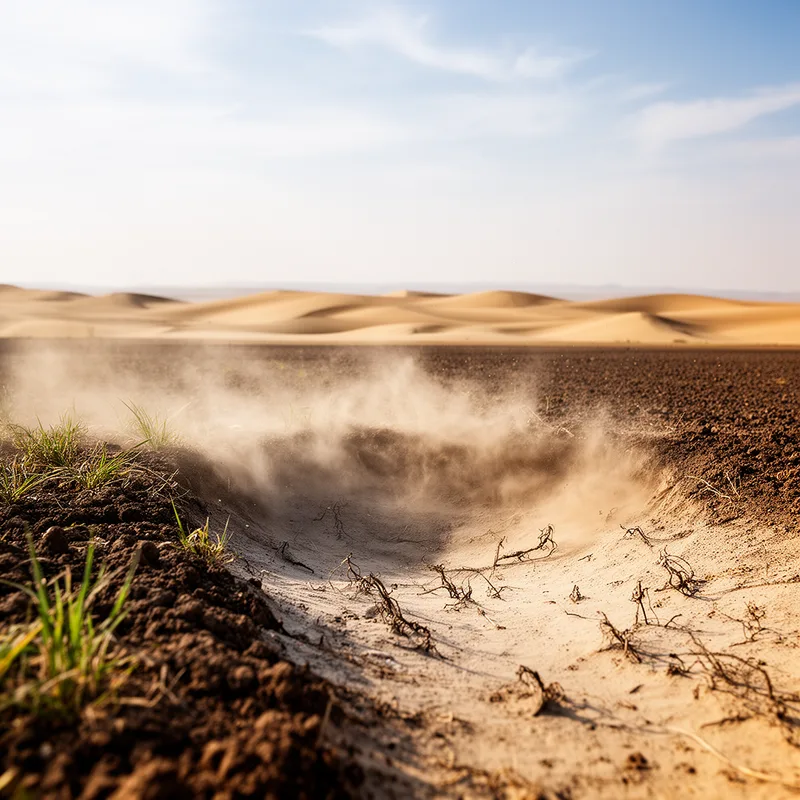
deflation
- noun
- /dɪˈfleɪʃən/
- Specialized
- The strong winds caused significant deflation of the sandy dunes along the coast.
Examples
-
After the storm, the deflation of the soil left large bare patches in the landscape.
-
Increased eolian deflation is another possible process that may have removed unconsolidated sediments and exposed the salty water table.
Academic text (2003) -
We may only be a decade away from this, and the impact of this technological deflation will be more obvious.
Blog text (31) -
There was some deflation over the three weeks when the eruption was active.
Blog text (25) -
1 - Increasing productivity and deflation have been big problems for the corporatists for over 100 years.
Blog text (31) -
Initially, the great width of the beach areas and the presence of fine material lead to excessive deflation (Draga 1983).
Academic text (1990) -
Some inland sabkhas may be remnants left over from higher sea levels, but the majority are probably due to deflation by wind of sand and silts more or less down to the water table.
Academic text (2003) -
Deflation ceases when the fine surface sediments have been removed, leaving a lag surface of coarser particles.
Academic text (1990) -
Researchers studied the deflation effects on the valley due to prolonged periods of high winds.
Synonyms

 29
4.2
29
4.2

A slow loss of strength, value, or trust
 3
3.8
3
3.8
The top part of land being worn away by rain or wind

Removal of a surface layer, for example from skin or land by natural forces
Antonyms

How Erosive
- Specialized

- Specialized
34
3.7
Surface Forms
Morphology
deflation = deflate (opaque) = de + flate + ion
The geological sense ('removal of loose material by wind') is a specialist technical meaning that cannot be derived from the everyday sense 'let air out'.
Etymology
Deflation comes from the Latin parts de- ('down' or 'away') and flate (from flare, 'to blow'), the same root as inflate. In geology, deflation is nearly literal — wind 'blows away' loose soil and sand, leaving the land lower or bare.