
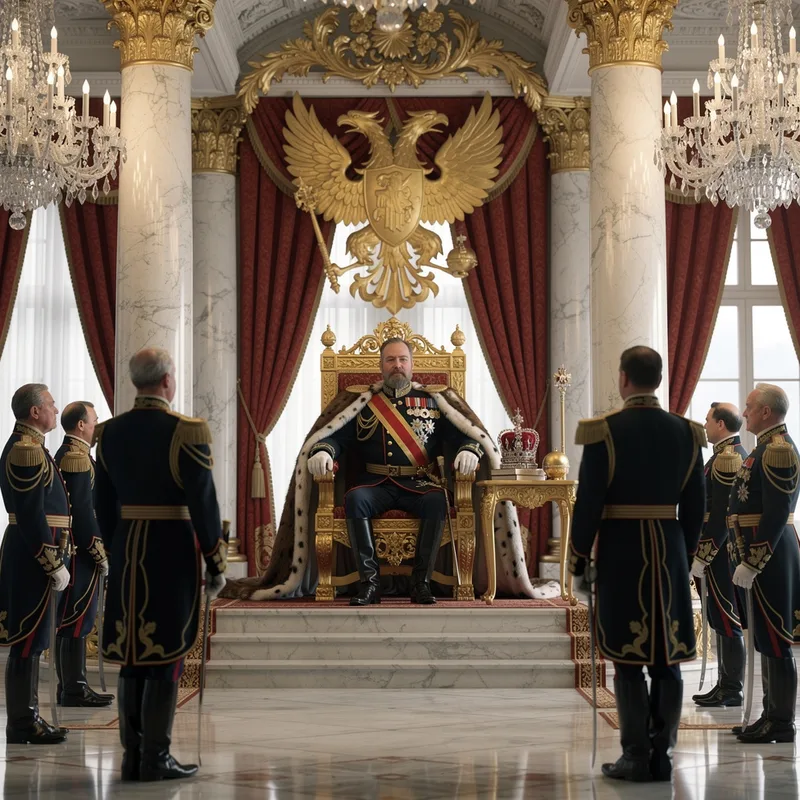
czarist
 4
9.8

- adjective
- /ˈzɑːrɪst/
- US
- In czarist Russia, aristocrats and educated people spoke French, frequently as their only language.
- czarist Russia
- czarist government
Loading YouTube…
Watch on YouTubeIt was the czarist political system itself that did that.
- It was the czarist political system itself that did that.
- But of course this was fundamentally opposed to the old czarist Russian imperialist idea of Russia as one whole.
- The war continues after the czarist regime has been toppled in the capital and there's been a revolution.
Examples
-
Jewish nationalism was born out of the defiance of the oppressed masses in czarist Russia.
Academic text (2002) -
For a time during the late czarist era at the turn of the 19th century, Russia was the world's largest exporter of petroleum.
Academic text (1999) -
It was the czarist political system itself that did that.
-
The grand duke is associated with all that is oppressive in the czarist society.
Academic text (1991) -
All of the power is concentrated in the czarist army and the bureaucracy.
-
His father was a a Democrat in Czarist Russia and he was quite a reformer.
-
The war continues after the czarist regime has been toppled in the capital and there's been a revolution.
-
Many of the so-called White Russians, the elite of the czarist society, fled the country at this time and sought shelter elsewhere.
Fiction book (2001) -
The driver has just delivered the dented box to Aleksei, a Russian businessman, who closes the door of a Czarist-era building.
Fiction book (2000) -
The reformist policies in the new government were a direct response to the failures of the czarist regime.
Synonyms


 1
9.9
A leader who has harsh, total power and treats people unfairly
Relating to the old Russian rulers who had total power
Relating to a ruler like a king in old Russia or to that ruler's government
Surface Forms
Morphology
Etymology
The word czarist comes from the title czar, also spelled tsar, which comes from Caesar, the Roman family name that became a word for 'emperor'. So czarist means 'relating to a czar' or to the old Russian system ruled by emperors.